Tunic Fragment with Segmentum (c. 500): Art, History and Details
Tunic Fragment with Segmentum at the Cleveland Museum of Art: c. 500, Wool, linen, and dye. Explore the work's context, creator attribution and collection history.
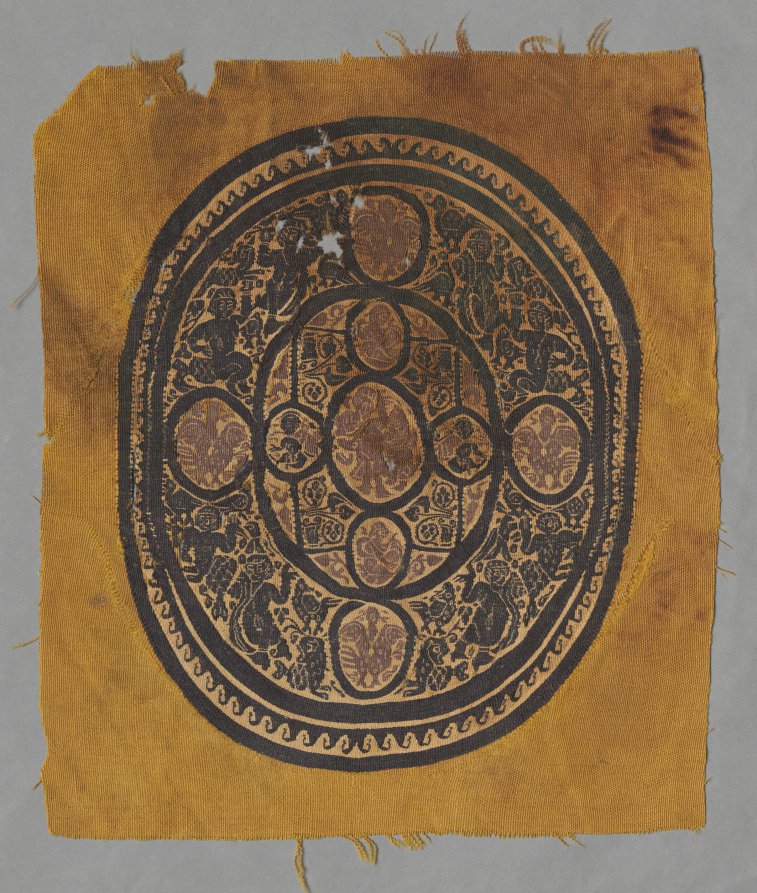
Tunic Fragment with Segmentum (c. 500) is in the Cleveland Museum of Art collection.
The work and its context
The museum's open-access catalogue describes the work:
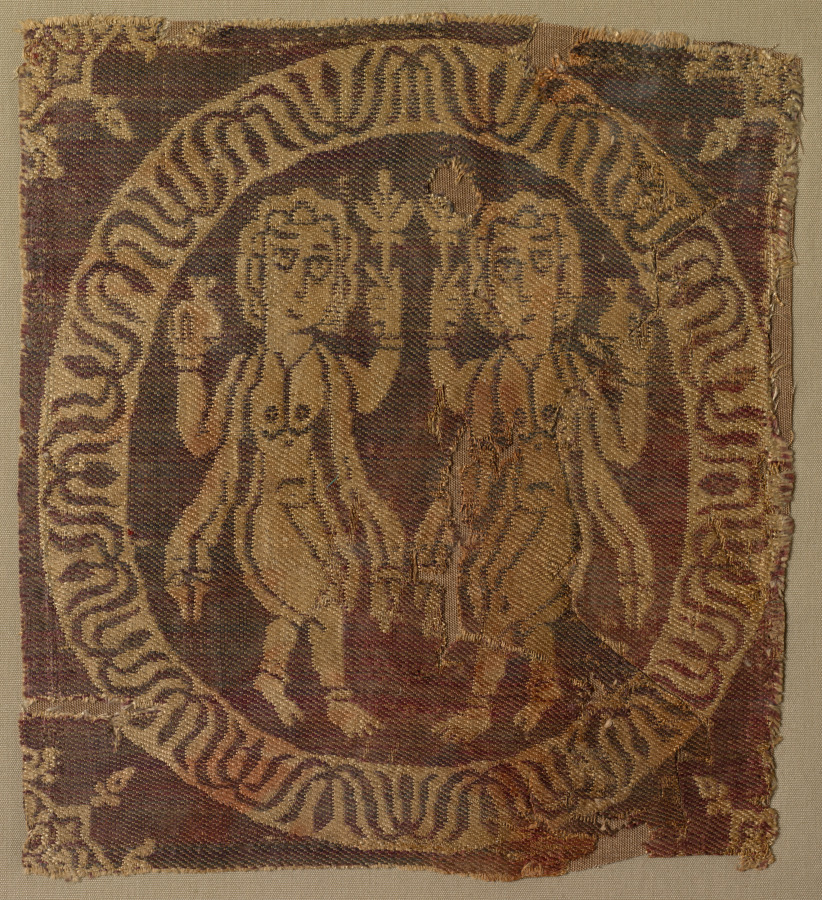
Segmentum (medallions) like this decorated tunics in Coptic Egypt. Medallions were woven into a tunic’s shoulders or lower half. This medallion's design scheme displays waves encircling geometric shapes and representational images. Coptic can refer to a language, an ethnic group, a religion, or an artistic style (which wasn’t always Christian). Coptic classical imagery reflects the Hellenized (Greek, 305–30 BC) and Roman cultures of Egypt (30 BC–AD 395) before the Byzantine era.
Object facts
- Title: Tunic Fragment with Segmentum
- Date: c. 500
- Culture: Africa, North Africa, Egypt, Coptic-style weaver(s)
- Type: Textile
- Technique: Wool, linen, and dye
- Dimensions: Overall: 34 x 29.2 cm (13 3/8 x 11 1/2 in.)
- Collection: T - Coptic
- Department: Textiles
- Accession number: 1982.270
A detail from the museum
Many different kinds of birds are woven into this medallion, hiding amongst the floral and scroll designs.
Collection credit
Purchase from the J. H. Wade Fund
View the collection record
See the museum's photographs and full catalogue entry. Catalogue text is reproduced from the Cleveland Museum of Art's open-access data, with HTML formatting removed. This object and its supplied image are designated CC0.
Sources
More in Lifestyle
Keep reading
Related stories