Tunic with Double-headed Serpents (400–200 BCE): Art, History and Details
Tunic with Double-headed Serpents at the Cleveland Museum of Art: 400–200 BCE, cotton; gauze. Explore the work's context, creator attribution and collection history.
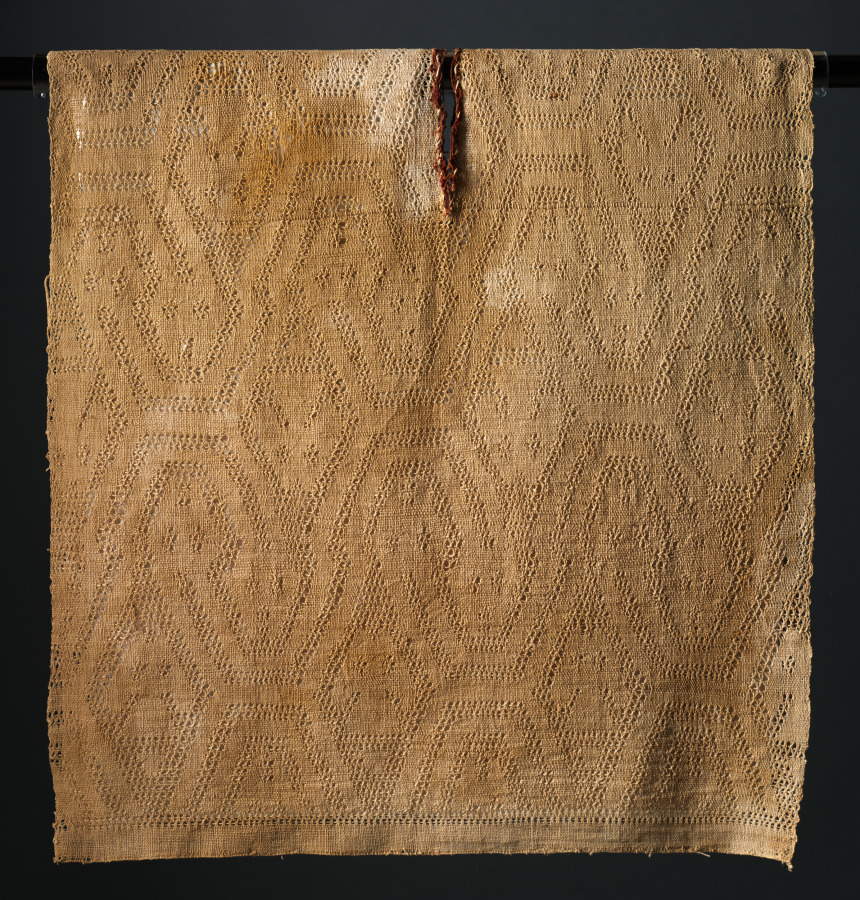
Tunic with Double-headed Serpents (400–200 BCE) is in the Cleveland Museum of Art collection.
The work and its context
The museum's open-access catalogue describes the work:
Gauze weave was used to pattern this tunic with interlocking, double-headed serpents that may have had mythical or supernatural significance. By manipulating the density of the fabric to create the design, the weaver may have sidestepped a limitation of cotton, which did not readily take dyes.
Object facts
- Title: Tunic with Double-headed Serpents
- Date: 400–200 BCE
- Culture: Peru, South Coast, Ica Valley, Ocucaje site?, Paracas people (700 BCE-1 CE)
- Type: Textile
- Technique: cotton; gauze
- Dimensions: folded: 68.3 x 65.4 cm (26 7/8 x 25 3/4 in.)
- Collection: T - Pre-Columbian
- Department: Textiles
- Accession number: 2005.17
Collection credit
Dudley P. Allen Fund
View the collection record
See the museum's photographs and full catalogue entry. Catalogue text is reproduced from the Cleveland Museum of Art's open-access data, with HTML formatting removed. This object and its supplied image are designated CC0.
Sources
More in Lifestyle
Keep reading