Tunjos (Votive Offering Figurine) (c. 900–1550): Art, History and Details
Tunjos (Votive Offering Figurine) at the Cleveland Museum of Art: c. 900–1550, cast gold. Explore the work's context, creator attribution and collection history.
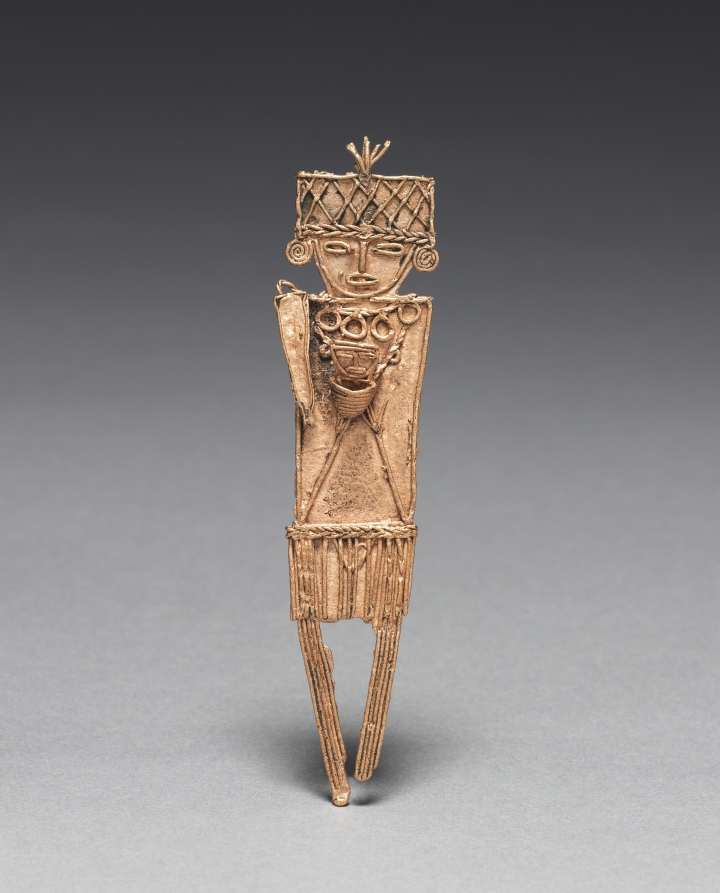
Tunjos (Votive Offering Figurine) (c. 900–1550) is in the Cleveland Museum of Art collection.
The work and its context
The museum's open-access catalogue describes the work:
Unlike the other gold ornaments made in the isthmian region, tunjos were not worn; instead, they served as offerings that were deposited in sacred places such as lagoons and caves. They often depict humans who hold something. Perhaps because they were not meant for display, tunjos were not finished after lost-wax casting. Flaws remain uncorrected, surfaces are unpolished, and gold that backed into the channel used to pour the molten metal into the mold was left in place.
Object facts
- Title: Tunjos (Votive Offering Figurine)
- Date: c. 900–1550
- Culture: Colombia, Muisca style
- Type: Metalwork
- Technique: cast gold
- Dimensions: Overall: 10.1 x 2.4 x 0.7 cm (4 x 15/16 x 1/4 in.)
- Collection: AA - Intermediate Region
- Department: Art of the Americas
- Accession number: 1947.22
Collection credit
In memory of Mr. and Mrs. Henry Humphreys, gift of their daughter Helen
View the collection record
See the museum's photographs and full catalogue entry. Catalogue text is reproduced from the Cleveland Museum of Art's open-access data, with HTML formatting removed. This object and its supplied image are designated CC0.
Sources
More in Lifestyle
Keep reading