Turkmen Main Carpet (1870s): Art, History and Details
Turkmen Main Carpet at the Cleveland Museum of Art: 1870s, Wool, silk; 171 symmetrical (Turkish) knots per square inch. Explore the work's context, creator attribution and collection history.
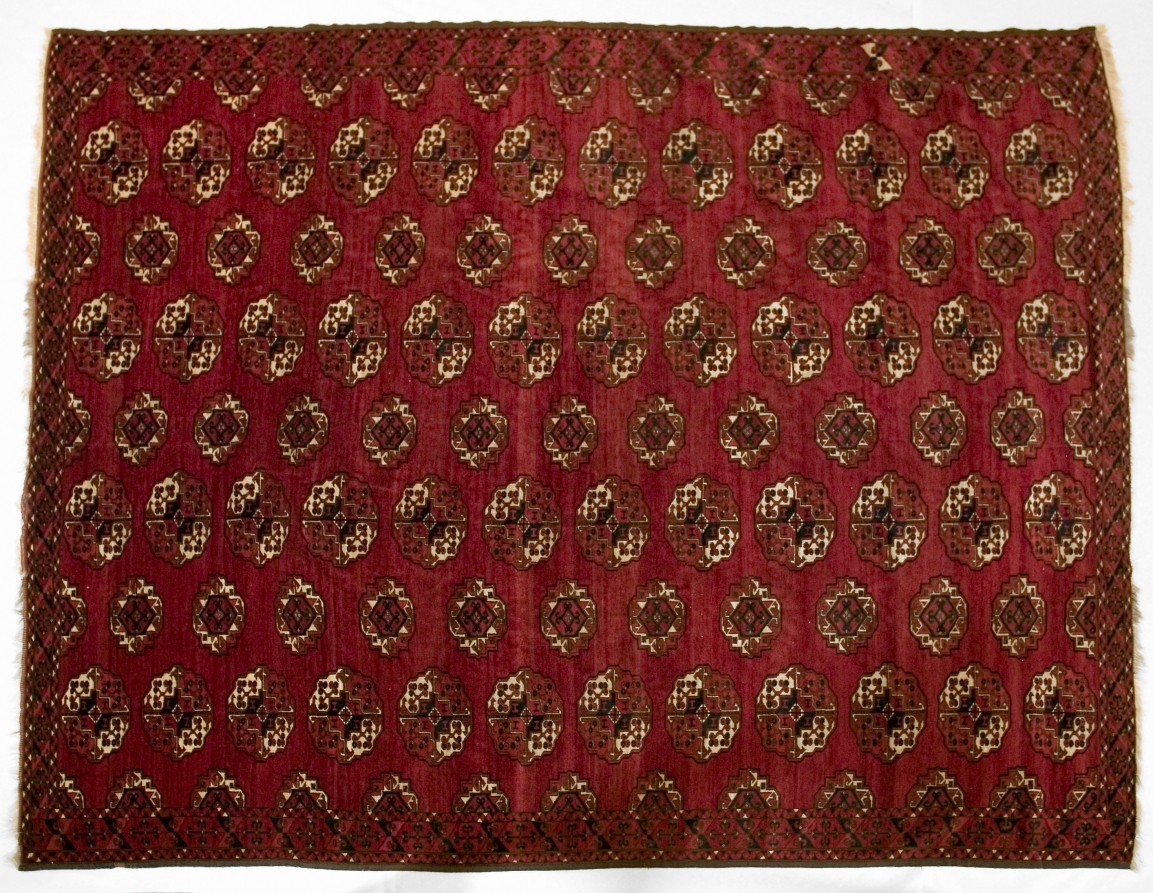
Turkmen Main Carpet (1870s) is in the Cleveland Museum of Art collection.
The work and its context
The museum's open-access catalogue describes the work:
Traditionally woven by women and girls, carpets are identified by fiber content, color, weave, and especially the type of rug knot-diagnostic features that are more reliable than designs. This rare carpet is admired for its brilliant color, lustrous wool, and spacious drawing. The main gul, or lobed motif, with three distinctive clover-leaf devices in each quadrant was a hallmark of the esteemed Salor tribe and often copied by other Turkmen tribes. The minor gul and the main border design were also duplicated. Only the minor borders with triangles in contrasting colors are Saryk hallmarks.
Object facts
- Title: Turkmen Main Carpet
- Date: 1870s
- Culture: Turkmenistan or Afghanistan, Saryk tribe, 19th century
- Type: Carpet
- Technique: Wool, silk; 171 symmetrical (Turkish) knots per square inch
- Dimensions: Overall: 257.7 x 250.2 cm (101 7/16 x 98 1/2 in.)
- Collection: Textiles
- Department: Textiles
- Accession number: 2006.201
Collection credit
Gift of Arlene C. Cooper
View the collection record
See the museum's photographs and full catalogue entry. Catalogue text is reproduced from the Cleveland Museum of Art's open-access data, with HTML formatting removed. This object and its supplied image are designated CC0.
Sources
More in Lifestyle
Keep reading