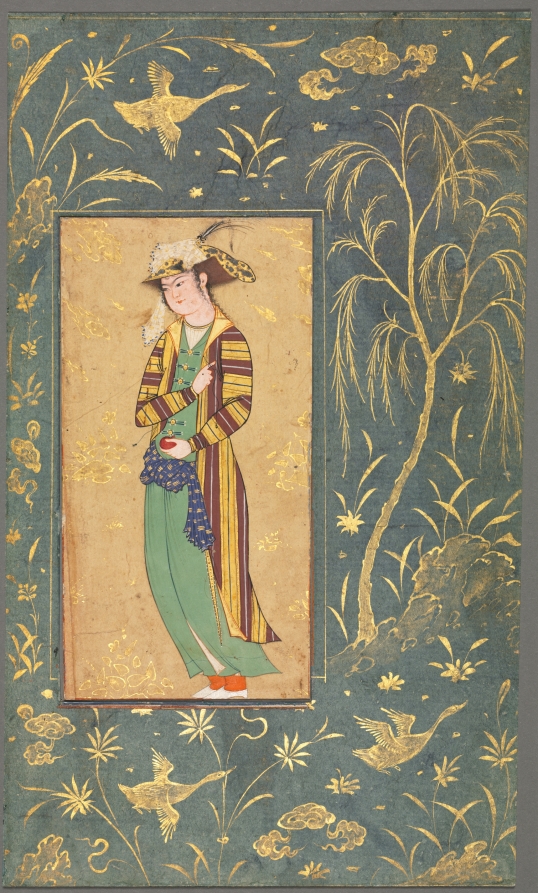
Tuti-Nama (Tales of a Parrot) (c. 1560): Art, History and Details
Tuti-Nama (Tales of a Parrot) at the Cleveland Museum of Art: c. 1560, gum tempera, ink, and gold on paper. Explore the work's context, creator attribution and collection history.
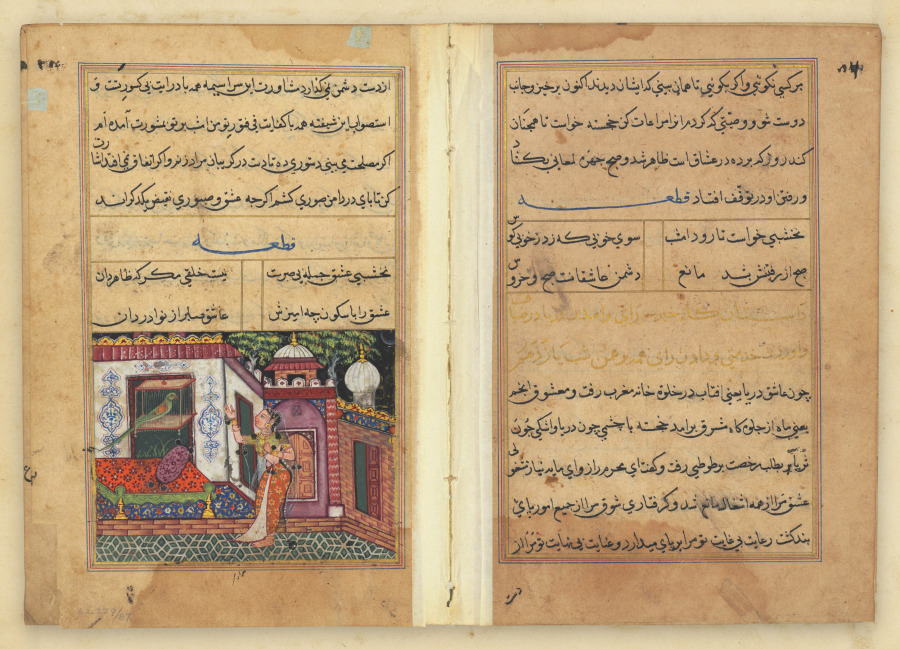
Tuti-Nama (Tales of a Parrot) (c. 1560) is in the Cleveland Museum of Art collection.
The work and its context
The museum's open-access catalogue describes the work:
The Tuti-Nama, written in Persian in the early fourteenth century, contains a series of fifty-two moralizing tales told by a clever, talking parrot. Each story is intended to instruct Khujasta and distract her from an adulterous affair. The Cleveland Museum of Art’s copy of the manuscript was painted for Emperor Akbar (r. 1556–1605) and represents the origins of Mughal painting.
Object facts
- Title: Tuti-Nama (Tales of a Parrot)
- Date: c. 1560
- Culture: Mughal India, court of Akbar (reigned 1556–1605)
- Type: Painting
- Technique: gum tempera, ink, and gold on paper
- Dimensions: Overall: 20.3 x 14 cm (8 x 5 1/2 in.)
- Collection: Indian Art
- Department: Indian and Southeast Asian Art
- Accession number: 1962.279
A detail from the museum
Another Akbari Tuti-Nama, painted in the 1580s, is held in Dublin’s Chester Beatty Library.
Collection credit
Gift of Mrs. A. Dean Perry
Further reading listed by the museum
- The Cleveland Museum of Art. Handbook of the Cleveland Museum of Art/1966. Cleveland, OH: The Cleveland Museum of Art, 1966.
- The Cleveland Museum of Art. Handbook of the Cleveland Museum of Art/1969. Cleveland, OH: The Cleveland Museum of Art, 1969.
- Chandra, Pramod, and Daniel J. Ehnbom. The Cleveland Tuti-Nama Manuscript and the Origins of Mughal Painting. Cleveland, OH: The Cleveland Museum of Art, 1976.
View the collection record
See the museum's photographs and full catalogue entry. Catalogue text is reproduced from the Cleveland Museum of Art's open-access data, with HTML formatting removed. This object and its supplied image are designated CC0.
Sources
More in Lifestyle
Keep reading