Twin Babies (c. 1870): Art, History and Details
Twin Babies at the Cleveland Museum of Art: c. 1870, salted paper print, hand-colored. Explore the work's context, creator attribution and collection history.
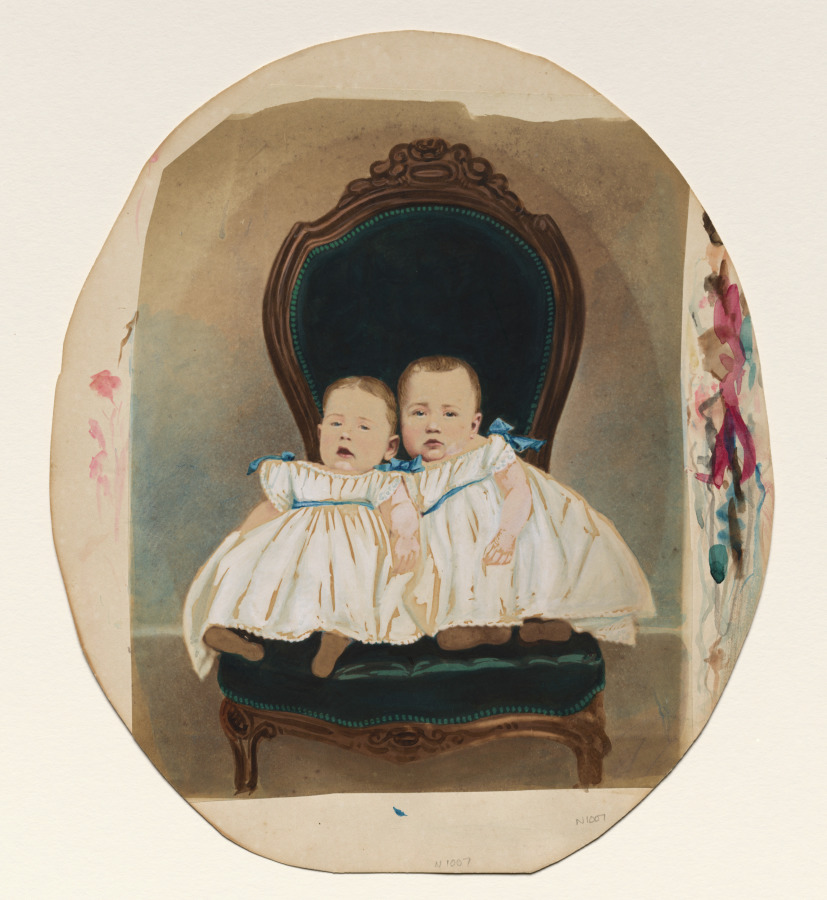
Twin Babies (c. 1870) is in the Cleveland Museum of Art collection. The museum's creator attribution is Davis Brothers (American).
The work and its context
The museum's open-access catalogue describes the work:
Color photography was not widely available until the 20th century, but 19th-century photographs could be embellished with hand-applied paints or dyes for an extra charge. Hand coloring, often done by women, usually was limited to adding dabs of pink on lips and cheeks or gold on jewelry, but sometimes, as here, the entire surface would be covered to emulate a painting. The edges of this mount are covered with trial dabs of watercolor that would have been hidden by the mat. Once portraits leave the context of the family, the identities of the sitters are most often lost, as is the case for these twins. Since the Davis Brothers’ studio was in Portsmouth, New Hampshire, around this time, one can assume the twins lived there.
Object facts
- Title: Twin Babies
- Date: c. 1870
- Creator attribution: Davis Brothers (American)
- Culture: America
- Type: Photograph
- Technique: salted paper print, hand-colored
- Dimensions: Image: 24 x 19.2 cm (9 7/16 x 7 9/16 in.); Paper: 29.2 x 25 cm (11 1/2 x 9 13/16 in.)
- Collection: PH - American 19th Century
- Department: Photography
- Accession number: 2003.302
Collection credit
Gift of Charles Isaacs and Carol Nigro
View the collection record
See the museum's photographs and full catalogue entry. Catalogue text is reproduced from the Cleveland Museum of Art's open-access data, with HTML formatting removed. This object and its supplied image are designated CC0.
Sources
More in Lifestyle
Keep reading