Two Beggars Fighting (1610–20): Art, History and Details
Two Beggars Fighting at the Cleveland Museum of Art: 1610–20, etching. Explore the work's context, creator attribution and collection history.
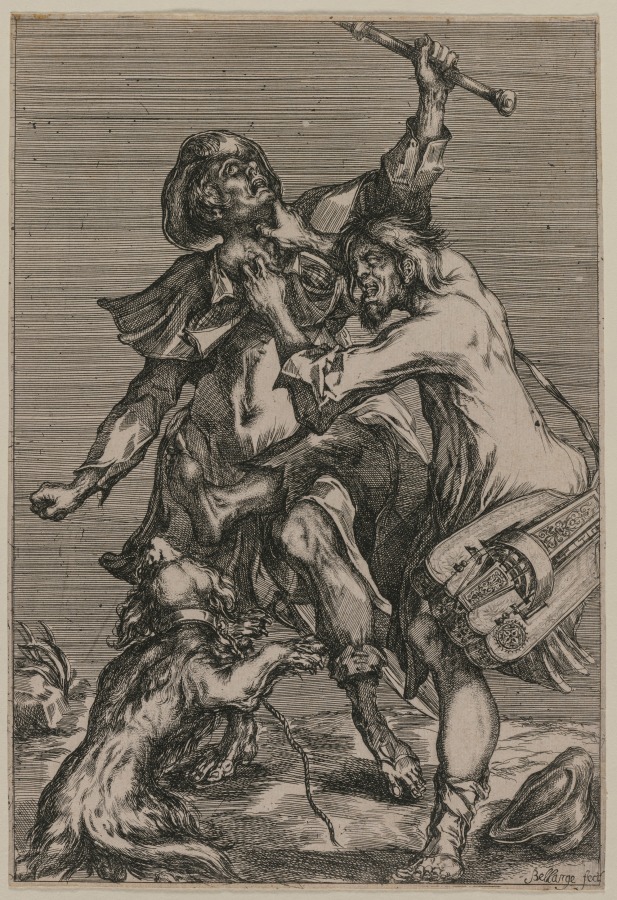
Two Beggars Fighting (1610–20) is in the Cleveland Museum of Art collection. The museum's creator attribution is Jacques Bellange (French, c. 1575–1616).
The work and its context
The museum's open-access catalogue describes the work:
Since antiquity, music was considered to inspire two different effects: it could elevate the soul to spiritual thoughts, or arouse passions both violent and sensual. In this genre scene, two transients engage in an epic struggle. The hurdy-gurdy, slung across the body of one of the vagabonds, was considered a "base" instrument whose melodies heated the senses without uplifiting the spirit. In his Syntagma Musicum of 1618, the musical theorist Michael Praetorius dubbed the hurdy-gurdy a "fiddle for peasants and loose women."
Object facts
- Title: Two Beggars Fighting
- Date: 1610–20
- Creator attribution: Jacques Bellange (French, c. 1575–1616)
- Culture: France
- Type: Print
- Technique: etching
- Collection: PR - Etching
- Department: Prints
- Accession number: 1960.20
Collection credit
Fortieth Anniversary Gift of The Print Club of Cleveland in honor of William Mathewson Milliken
View the collection record
See the museum's photographs and full catalogue entry. Catalogue text is reproduced from the Cleveland Museum of Art's open-access data, with HTML formatting removed. This object and its supplied image are designated CC0.
Sources
More in Lifestyle
Keep reading