Unguent Bottle (Krateriskos) (c. 1336–1295 BCE): Art, History and Details
Unguent Bottle (Krateriskos) at the Cleveland Museum of Art: c. 1336–1295 BCE, glass. Explore the work's context, creator attribution and collection history.
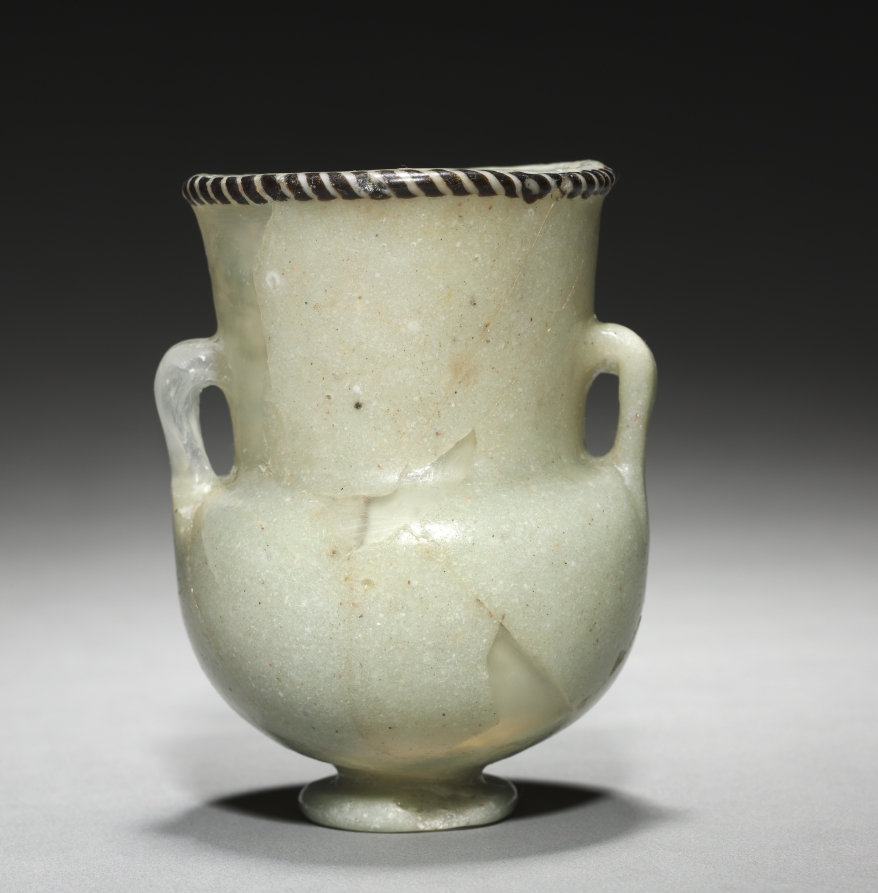
Unguent Bottle (Krateriskos) (c. 1336–1295 BCE) is in the Cleveland Museum of Art collection.
The work and its context
The museum's open-access catalogue describes the work:
This was probably the most popular type of Egyptian glass vessel. The milky white to sea green-colored fabric and monochrome decorative scheme are reminiscent of Egyptian alabaster. That the Egyptians would make an association between glass and stone is only natural, as the Egyptian name for glass was inr n(y) wdh or "the flowing stone."
Object facts
- Title: Unguent Bottle (Krateriskos)
- Date: c. 1336–1295 BCE
- Culture: Egypt, New Kingdom (1540–1069 BCE), Dynasty 18, post-Amarna period or later
- Type: Vessels
- Technique: glass
- Dimensions: Diameter: 8.1 cm (3 3/16 in.); Diameter of mouth: 7.1 cm (2 13/16 in.); Overall: 11 cm (4 5/16 in.)
- Collection: Egypt - New Kingdom
- Department: Egyptian and Ancient Near Eastern Art
- Accession number: 1914.541
Collection credit
Gift of the John Huntington Art and Polytechnic Trust
Further reading listed by the museum
- The Cleveland Museum of Art. Handbook of the Cleveland Museum of Art/1966. Cleveland, OH: The Cleveland Museum of Art, 1966.
- The Cleveland Museum of Art. Handbook of the Cleveland Museum of Art/1969. Cleveland, OH: The Cleveland Museum of Art, 1969.
- Berman, Lawrence M., and Kenneth J. Bohač. Catalogue of Egyptian Art: The Cleveland Museum of Art. Cleveland, OH: Cleveland Museum of Art, 1999
View the collection record
See the museum's photographs and full catalogue entry. Catalogue text is reproduced from the Cleveland Museum of Art's open-access data, with HTML formatting removed. This object and its supplied image are designated CC0.
Sources
More in Lifestyle
Keep reading


