Unite: James I (obverse); Shield of Arms (reverse) (1613–15): Art, History and Details
Unite: James I (obverse); Shield of Arms (reverse) at the Cleveland Museum of Art: 1613–15, gold. Explore the work's context, creator attribution and collection history.
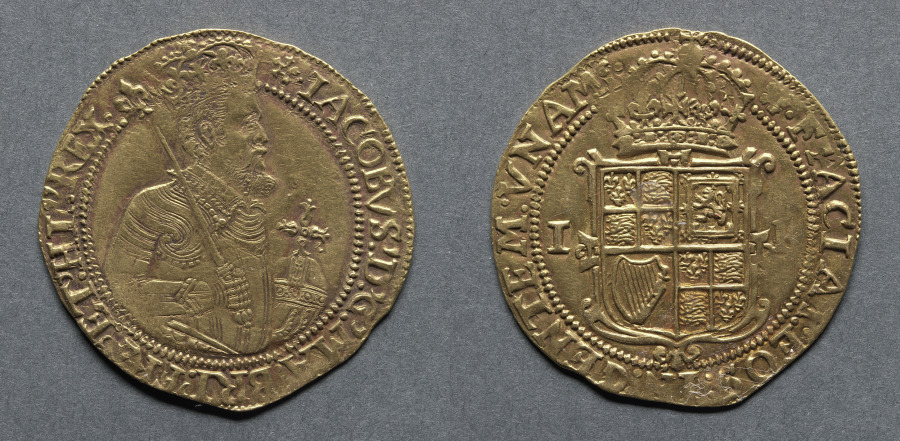
Unite: James I (obverse); Shield of Arms (reverse) (1613–15) is in the Cleveland Museum of Art collection.
The work and its context
The museum's open-access catalogue describes the work:
The unite was one of the new denominations introduced after the coinage had been down-rated by ten percent and then restored in 1611. It was so named because the accession of James I brought about the union of the thrones of England and Scotland. On the obverse the king's titles now read James by the grace of God King of England, Scotland, France and Ireland. While on the reverse is a reference to Ezekiel 37:2 in the Vulgate Bible, I Will Make Them One Nation.
Object facts
- Title: Unite: James I (obverse); Shield of Arms (reverse)
- Date: 1613–15
- Culture: England, James I, 1603-1625
- Type: Coins
- Technique: gold
- Dimensions: Diameter: 3.7 cm (1 7/16 in.)
- Collection: MED - Numismatics
- Department: Medieval Art
- Accession number: 1969.189
A detail from the museum
The shield of Scotland shows a lion while that of Ireland is the harp.
Collection credit
The Norweb Collection
Further reading listed by the museum
- Cleveland Museum of Art, and Emery May Norweb. English Gold Coins, Ancient to Modern Times, On Loan to the Cleveland Museum of Art from the Norweb Collection. [Catalog. 1968.
View the collection record
See the museum's photographs and full catalogue entry. Catalogue text is reproduced from the Cleveland Museum of Art's open-access data, with HTML formatting removed. This object and its supplied image are designated CC0.
Sources
More in Lifestyle
Keep reading