Urn Figure (c. 150 BCE–200 CE (thermoluminescence date, 60 BCE–642 CE)): Art, History and Details
Urn Figure at the Cleveland Museum of Art: c. 150 BCE–200 CE (thermoluminescence date, 60 BCE–642 CE), earthenware. Explore the work's context, creator attribution and collection history.
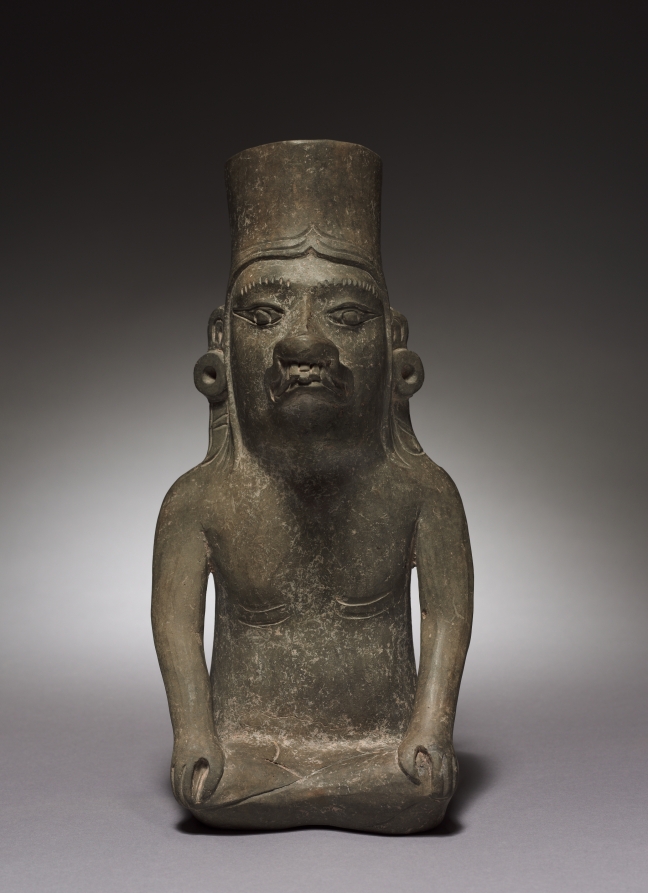
Urn Figure (c. 150 BCE–200 CE (thermoluminescence date, 60 BCE–642 CE)) is in the Cleveland Museum of Art collection.
The work and its context
The museum's open-access catalogue describes the work:
This simply posed and costumed urn figure represents a goddess, or perhaps an ancestress. Early Zapotec ceramic art has a spare elegance that contrasts strongly with the florid ornamentation of later works.
Object facts
- Title: Urn Figure
- Date: c. 150 BCE–200 CE (thermoluminescence date, 60 BCE–642 CE)
- Culture: Mexico, Oaxaca, Zapotec
- Type: Sculpture
- Technique: earthenware
- Dimensions: Overall: 29.8 x 14.4 x 13 cm (11 3/4 x 5 11/16 x 5 1/8 in.)
- Collection: AA - Mesoamerica
- Department: Art of the Americas
- Accession number: 1990.273
Collection credit
Gift of Mr. and Mrs. James C. Gruener
Further reading listed by the museum
- Boos, Frank H. The Ceramic Sculptures of Ancient Oaxaca. Los Angeles (California): [s.n.], 1967.
- Young-Sánchez, Margaret. "The Gruener Collection of Pre-Columbian Art." The Bulletin of the Cleveland Museum of Art 79, no. 7 (1992): 234-75.
View the collection record
See the museum's photographs and full catalogue entry. Catalogue text is reproduced from the Cleveland Museum of Art's open-access data, with HTML formatting removed. This object and its supplied image are designated CC0.
Sources
More in Lifestyle
Keep reading