Vase with Bamboo Joints (1914–46): Art, History and Details
Vase with Bamboo Joints at the Cleveland Museum of Art: 1914–46, Porcelain with green glaze and molded design. Explore the work's context, creator attribution and collection history.
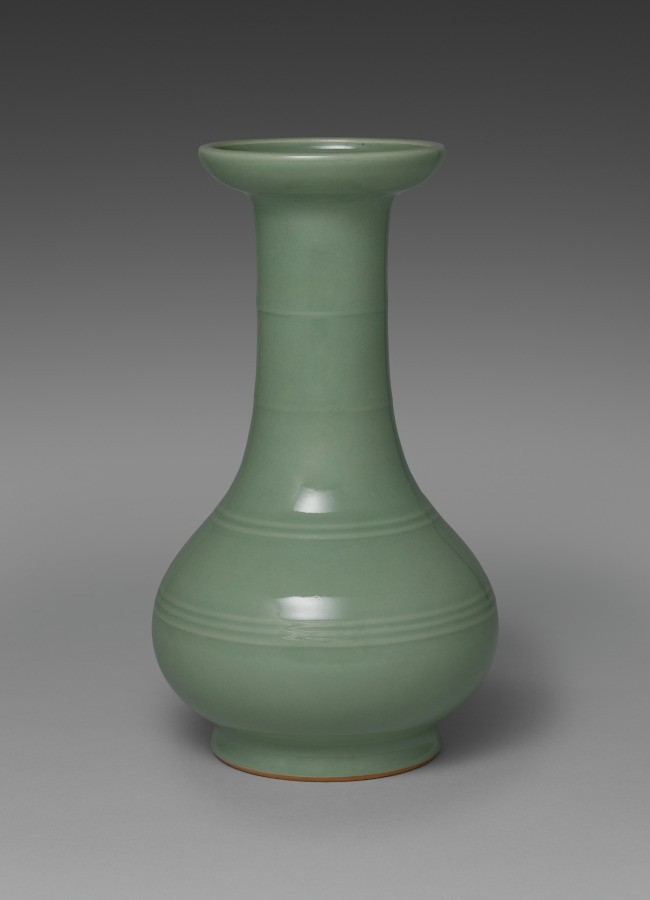
Vase with Bamboo Joints (1914–46) is in the Cleveland Museum of Art collection. The museum's creator attribution is Seifū Yohei IV (Japanese, 1872–1951).
The work and its context
The museum's open-access catalogue describes the work:
Yohei IV’s Vase with Bamboo Joints has a shape often seen in pairs of bronze flower vases placed to either side of Buddhist altars before sculptural icons. While the term hisoku (Chinese mise 秘色), or “mysterious color” glazing, indicates a more specific green color than seiji 青磁, a more general word for green-glazed porcelain, there is still some range in the actual color of the glaze.
Object facts
- Title: Vase with Bamboo Joints
- Date: 1914–46
- Creator attribution: Seifū Yohei IV (Japanese, 1872–1951)
- Culture: Japan, Taishō period (1912–26)
- Type: Ceramic
- Technique: Porcelain with green glaze and molded design
- Dimensions: height: 30.5 cm (12 in.); Diameter: 15.2 cm (6 in.); height with stand: 33 cm (13 in.)
- Collection: Japanese Art
- Department: Japanese Art
- Accession number: 2022.235
A detail from the museum
Many ceramics created by the Seifū Studio refer to and emulate Chinese ceramics in form and glazing.
Collection credit
Gift of James and Christine Heusinger
Further reading listed by the museum
- Maezaki, Shinya and Sinéad Vilbar. Colors of Kyoto: The Seifū Yohei Ceramic Studio. Cleveland, OH: The Cleveland Museum of Art, 2023.
View the collection record
See the museum's photographs and full catalogue entry. Catalogue text is reproduced from the Cleveland Museum of Art's open-access data, with HTML formatting removed. This object and its supplied image are designated CC0.
Sources
More in Lifestyle
Keep reading