Vase with Three Rams' Heads (1736–1795): Art, History and Details
Vase with Three Rams' Heads at the Cleveland Museum of Art: 1736–1795, cloisonné enamel. Explore the work's context, creator attribution and collection history.
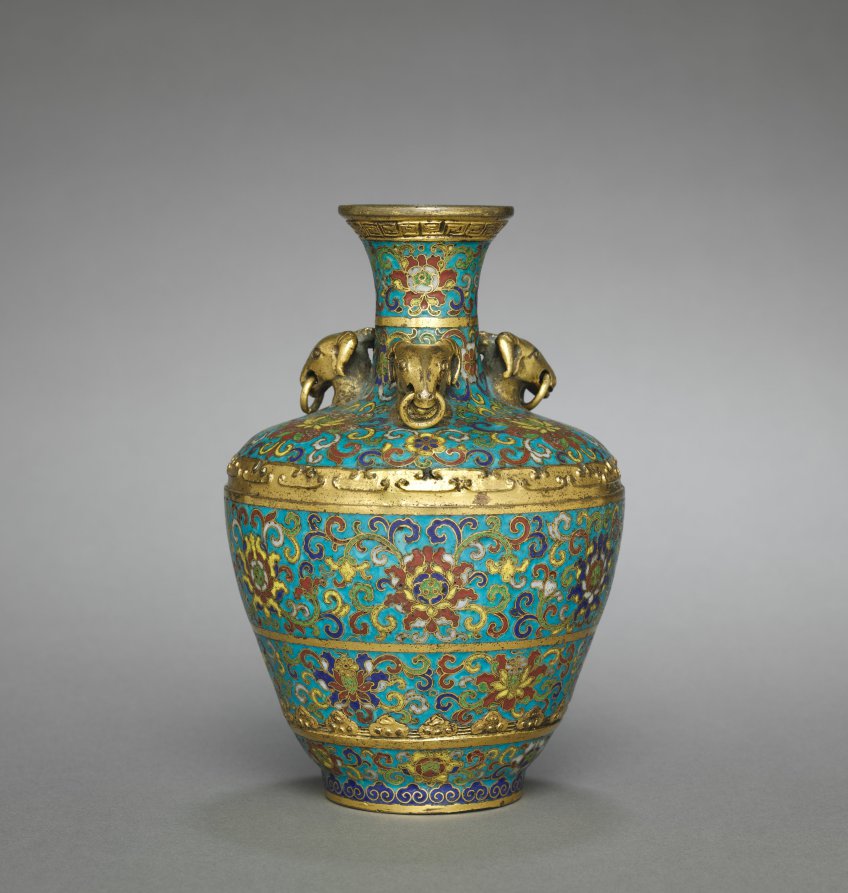
Vase with Three Rams' Heads (1736–1795) is in the Cleveland Museum of Art collection.
The work and its context
The museum's open-access catalogue describes the work:
In cloisonné enameling, the decorative patterns are outlined by soldering metal wires (usually copper) to a metal base, creating a network of cells, or cloisons, to be filled with powdered enamels. After firing, the enamels are polished to create a smooth surface level with the cloisons. The exposed metal surfaces are gilt.
Object facts
- Title: Vase with Three Rams' Heads
- Date: 1736–1795
- Culture: China, Jiangxi province, Jingdezhen, Qing dynasty (1644-1911), Qianlong mark and reign (1736-1795)
- Type: Enamel
- Technique: cloisonné enamel
- Dimensions: Diameter: 9.4 cm (3 11/16 in.); Overall: 14 cm (5 1/2 in.)
- Collection: China - Qing Dynasty
- Department: Chinese Art
- Accession number: 1989.321
Collection credit
Bequest of Mrs. Severance A. Millikin
View the collection record
See the museum's photographs and full catalogue entry. Catalogue text is reproduced from the Cleveland Museum of Art's open-access data, with HTML formatting removed. This object and its supplied image are designated CC0.
Sources
More in Lifestyle
Keep reading