Vertumnus and Pomona (c. 1776): Art, History and Details
Vertumnus and Pomona at the Cleveland Museum of Art: c. 1776, Color wash-manner etching and engraving with applied gold leaf. Explore the work's context, creator attribution and collection history.
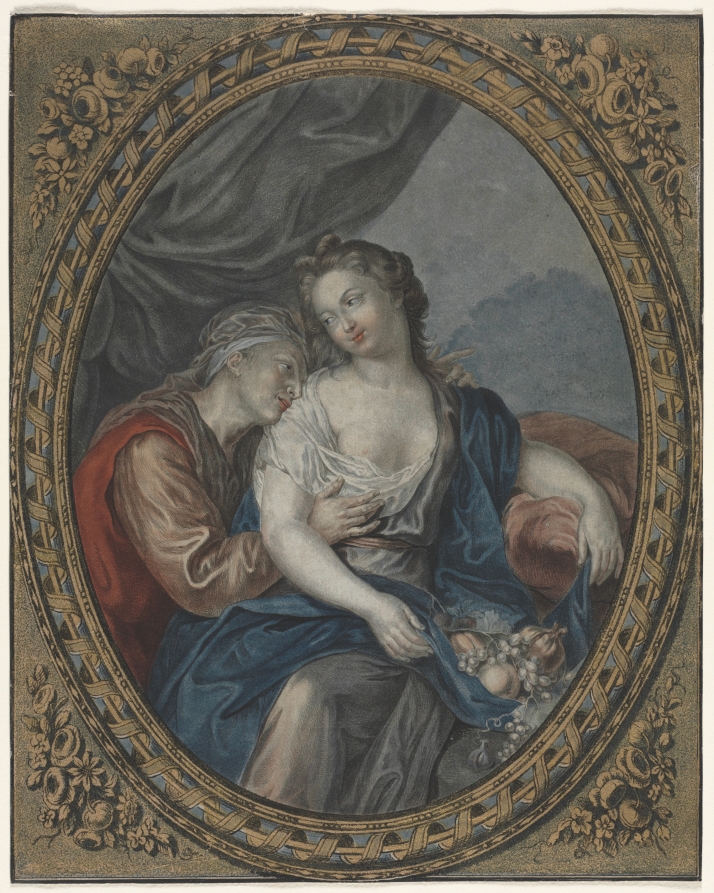
Vertumnus and Pomona (c. 1776) is in the Cleveland Museum of Art collection. The museum's creator attribution is Jean François Janinet (French, 1752–1814); Antoine Coypel (French, 1661–1722).
The work and its context
The museum's open-access catalogue describes the work:
In 1774 Louis-Marin Bonnet developed yet another technical innovation: a printed gold leaf border. Janinet, who had been Bonnet's student, adopted this practice. However, because the use of gold leaf by printmakers was illegal (they were not among the trades officially allowed to use it), the two artists produced only about 20 prints with gold frames before they were caught by the authorities. In classical mythology, Pomona was a nymph who grew fruit but did not allow men to enter her orchard. Vertumnus, a handsome young man, disguised himself as an old woman to gain entry. After telling Pomona stories of love, he removed his disguise and won her hand.
Object facts
- Title: Vertumnus and Pomona
- Date: c. 1776
- Creator attribution: Jean François Janinet (French, 1752–1814); Antoine Coypel (French, 1661–1722)
- Culture: France
- Type: Print
- Technique: Color wash-manner etching and engraving with applied gold leaf
- Dimensions: Sheet: 33.3 x 26.5 cm (13 1/8 x 10 7/16 in.)
- Collection: PR - Lavis manner
- Department: Prints
- Accession number: 1987.90
Collection credit
Gift of Mr. and Mrs. Robert D. Milne in memory of Leona E. Prasse
View the collection record
See the museum's photographs and full catalogue entry. Catalogue text is reproduced from the Cleveland Museum of Art's open-access data, with HTML formatting removed. This object and its supplied image are designated CC0.
Sources
More in Lifestyle
Keep reading
Related stories