Vielle à roue (1700s): Art, History and Details
Vielle à roue at the Cleveland Museum of Art: 1700s, wood. Explore the work's context, creator attribution and collection history.
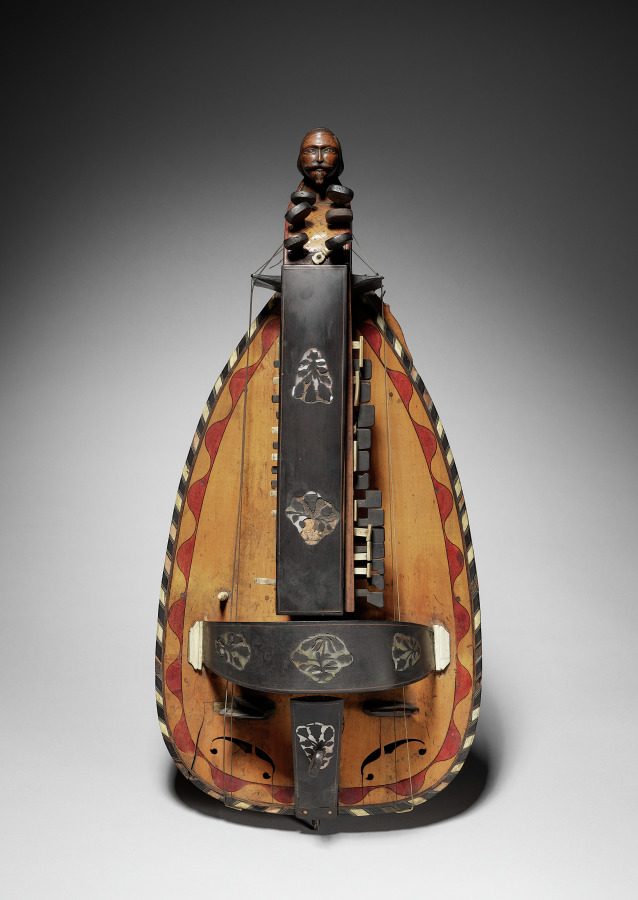
Vielle à roue (1700s) is in the Cleveland Museum of Art collection. The museum's creator attribution is Pajot of Jánzat (French).
The work and its context
The museum's open-access catalogue describes the work:
The instrumentalist could play melodies on the keyboard that presses tangents against one or more strings. Often there are also multiple drone strings, which give a constant pitch accompaniment to the melody, resulting in a sound similar to that of bagpipes. This type of instrument is depicted in several artworks in the CMA collection: 1924.656, 2008.34.2, 1960.20. The vielle à roue is also related to the Swedish nyckelharpa, which was featured on the CMA performing arts series in 2017 played by Emilia Amper.
Object facts
- Title: Vielle à roue
- Date: 1700s
- Creator attribution: Pajot of Jánzat (French)
- Culture: France
- Type: Musical Instrument
- Technique: wood
- Dimensions: Overall: 73.7 x 33 cm (29 x 13 in.)
- Collection: Decorative Arts
- Department: Decorative Art and Design
- Accession number: 1918.354
A detail from the museum
Also known as a “hurdy-gurdy” or “wheel fiddle,” this instrument produces sound by a hand crank-turned rosined wheel rubbing against the strings.
Collection credit
The Charles G. King Jr. collection; Gift of Ralph King in memory of Charles G. King Jr.
Further reading listed by the museum
- "Accessions." The Bulletin of the Cleveland Museum of Art 5, no. 8/9 (1918): 82-85.
- D. S. M. "Exhibition of Musical Instruments." The Bulletin of the Cleveland Museum of Art 8, no. 9 (1921): 134-43.
View the collection record
See the museum's photographs and full catalogue entry. Catalogue text is reproduced from the Cleveland Museum of Art's open-access data, with HTML formatting removed. This object and its supplied image are designated CC0.
Sources
More in Lifestyle
Keep reading