Vielle à Roue (Hurdy-Gurdy) (1865–70): Art, History and Details
Vielle à Roue (Hurdy-Gurdy) at the Cleveland Museum of Art: 1865–70, Wood; mother-of-pearl inlay. Explore the work's context, creator attribution and collection history.
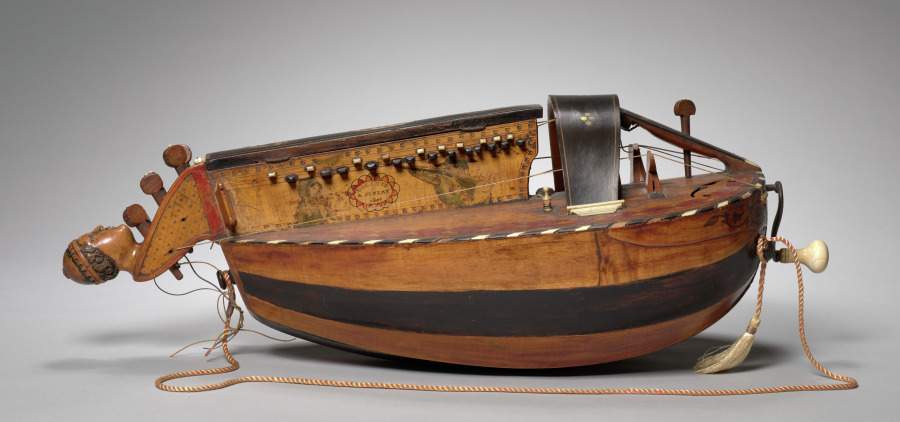
Vielle à Roue (Hurdy-Gurdy) (1865–70) is in the Cleveland Museum of Art collection. The museum's creator attribution is Jacques Decante (French, 1808–1884).
The work and its context
The museum's open-access catalogue describes the work:
In France, the hurdy-gurdy is known as the vielle à roue (wheel fiddle). This six-stringed musical instrument produces sound by a hand crank-turned wheel that rubs against the strings. The wheel functions much like a violin bow, and single notes sound similar to those of a violin. Melodies are played on a keyboard that presses small wedges against the strings to change their pitch.
Object facts
- Title: Vielle à Roue (Hurdy-Gurdy)
- Date: 1865–70
- Creator attribution: Jacques Decante (French, 1808–1884)
- Culture: France
- Type: Musical Instrument
- Technique: Wood; mother-of-pearl inlay
- Collection: Decorative Arts
- Department: Decorative Art and Design
- Accession number: 2020.422
A detail from the museum
This vielle à roue was made in the French village of Jenzat, which was the manufacturing center for hurdy-gurdies during the 19th century.
Collection credit
Gift of Clara Taplin Rankin
View the collection record
See the museum's photographs and full catalogue entry. Catalogue text is reproduced from the Cleveland Museum of Art's open-access data, with HTML formatting removed. This object and its supplied image are designated CC0.
Sources
More in Lifestyle
Keep reading