Village Scene (Southern France) (c. 1853): Art, History and Details
Village Scene (Southern France) at the Cleveland Museum of Art: c. 1853, salted paper print from waxed-paper negative. Explore the work's context, creator attribution and collection history.
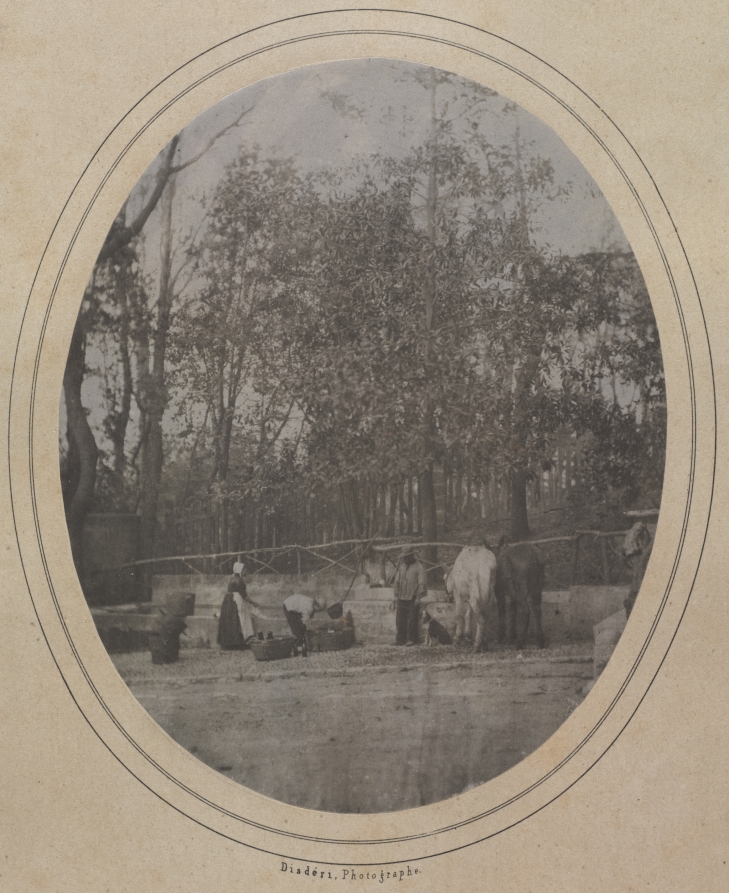
Village Scene (Southern France) (c. 1853) is in the Cleveland Museum of Art collection. The museum's creator attribution is André Adolphe-Eugène Disdéri (French, 1819–1889).
The work and its context
The museum's open-access catalogue describes the work:
André Adolphe-Eugène Disdéri is best known for his development in Paris in 1854 of the carte-de-visite format for portraits. The year before, he was living in Southern France where he made this rural view. Disderi used waxed-paper negatives for only a short time. The oval cropping and picturesque scene—posed but seemingly spontaneous—suggest that this is meant to be an artistic, rather than a documentary, photograph.
Object facts
- Title: Village Scene (Southern France)
- Date: c. 1853
- Creator attribution: André Adolphe-Eugène Disdéri (French, 1819–1889)
- Culture: France, 19th century
- Type: Photograph
- Technique: salted paper print from waxed-paper negative
- Dimensions: Image: 15.2 x 12.2 cm (6 x 4 13/16 in.); Matted: 45.7 x 35.6 cm (18 x 14 in.)
- Collection: PH - French 19th Century
- Department: Photography
- Accession number: 1996.352
A detail from the museum
This image was printed from a waxed-paper negative, a process superseded by the sharper, clearer glass plate negative.
Collection credit
John L. Severance Fund
View the collection record
See the museum's photographs and full catalogue entry. Catalogue text is reproduced from the Cleveland Museum of Art's open-access data, with HTML formatting removed. This object and its supplied image are designated CC0.
Sources
More in Lifestyle
Keep reading