Visored Sallet (c. 1490–1500): Art, History and Details
Visored Sallet at the Cleveland Museum of Art: c. 1490–1500, steel. Explore the work's context, creator attribution and collection history.
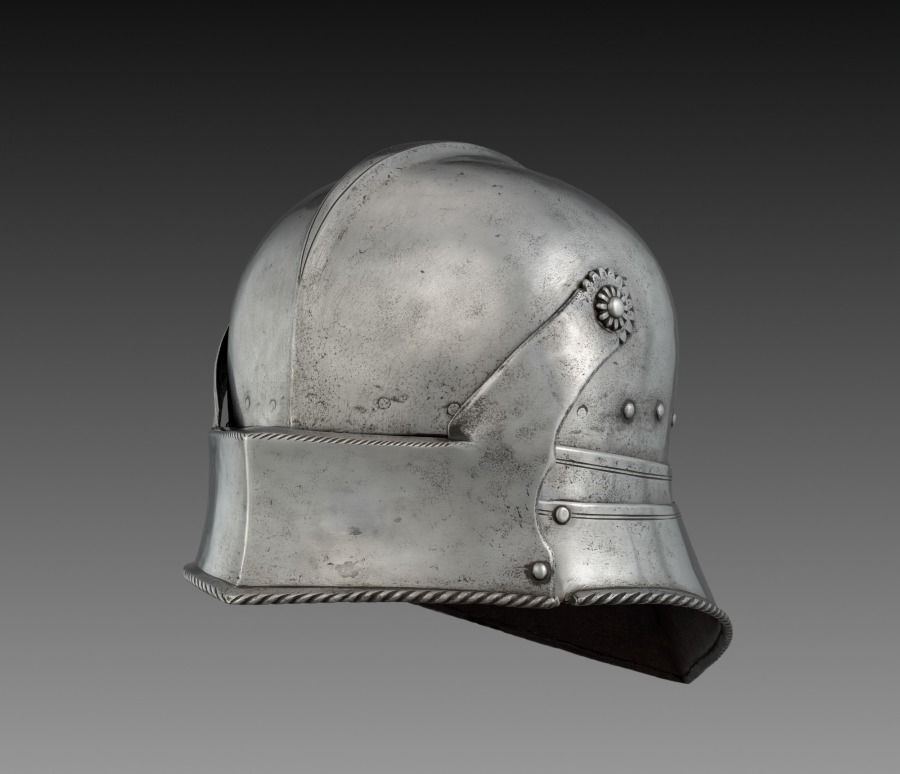
Visored Sallet (c. 1490–1500) is in the Cleveland Museum of Art collection.
The work and its context
The museum's open-access catalogue describes the work:
The sallet is a partly open-face helmet common in Europe during the 1400s, used in both equestrian and infantry versions. Sallets with movable visors, like this example, are considered to be more technically and visually interesting; beautifully streamlined, it assumes a highly sculptural teardrop shape. Originally it would have been part of a complete suit of armor. The sallet became the quintessential helmet form of the late Middle Ages and is frequently represented in medieval miniatures and woodcuts.
Object facts
- Title: Visored Sallet
- Date: c. 1490–1500
- Culture: Germany
- Type: Arms and Armor
- Technique: steel
- Dimensions: Overall: 21 x 25 x 42 cm (8 1/4 x 9 13/16 x 16 9/16 in.)
- Collection: MED - Arms & Armor
- Department: Medieval Art
- Accession number: 2014.393
A detail from the museum
Medieval sallets were design inspiration for modern-day fireman's helmets.
Collection credit
John L. Severance Fund
Further reading listed by the museum
- Fliegel, Stephen N. “Acquisition Highlights 2014: Medieval Art.” Cleveland Art: Cleveland Museum of Art Members Magazine 55, no. 2 (March/April 2015): 12-13.
View the collection record
See the museum's photographs and full catalogue entry. Catalogue text is reproduced from the Cleveland Museum of Art's open-access data, with HTML formatting removed. This object and its supplied image are designated CC0.
Sources
More in Lifestyle
Keep reading