Votive Head of a King (305–246 BCE): Art, History and Details
Votive Head of a King at the Cleveland Museum of Art: 305–246 BCE, limestone. Explore the work's context, creator attribution and collection history.
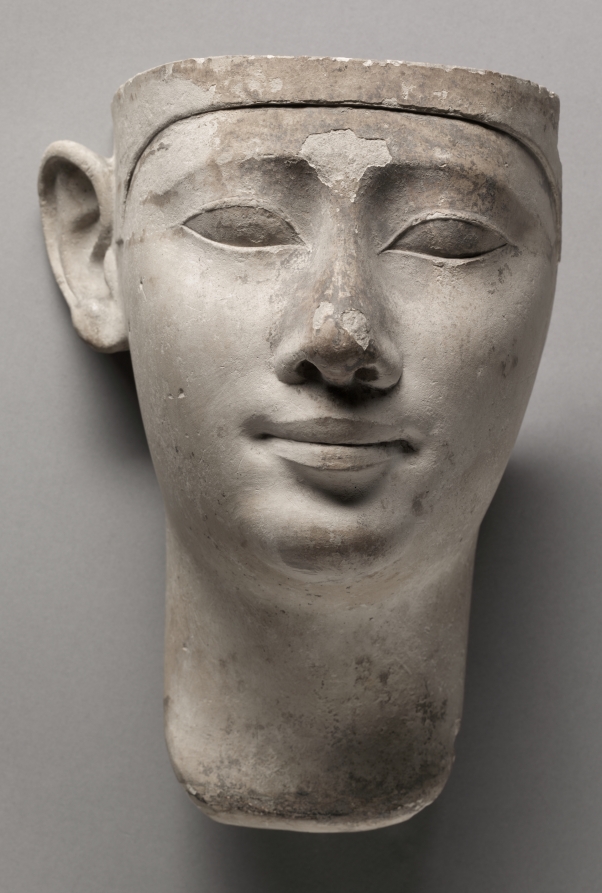
Votive Head of a King (305–246 BCE) is in the Cleveland Museum of Art collection.
The work and its context
The museum's open-access catalogue describes the work:
The browband, part of a royal headdress, identifies this fine head as a king. Curiously this head is in limestone, one of very few in this medium. They are fairly common in plaster. This one, apparently in imitation of its plaster prototypes, has been hollowed out; the gouging marks are still clearly visible. The portrait type is most closely associated with Ptolemy II. An exact date, however, is speculative at best as features like this occur as early as Dynasty 29.
Object facts
- Title: Votive Head of a King
- Date: 305–246 BCE
- Culture: Egypt, Greco-Roman period (332 BCE–395 CE), reign of Ptolemy II Philadelphus (285–246 BCE)
- Type: Sculpture
- Technique: limestone
- Dimensions: Overall: 21.6 x 16.5 cm (8 1/2 x 6 1/2 in.)
- Collection: Egypt - Ptolemaic Dynasty
- Department: Egyptian and Ancient Near Eastern Art
- Accession number: 1920.1999
A detail from the museum
The purpose of this sculpture is not known; it is assumed that this and others like it were votive offerings in honor of the king.
Collection credit
Gift of the John Huntington Art and Polytechnic Trust
Further reading listed by the museum
- Josephson, Jack A. Egyptian Royal Sculpture of the Late Period, 400-246 B.C. Mainz am Rhein: Verlag Philipp von Zabern, 1997.
- Berman, Lawrence M., and Kenneth J. Bohač. Catalogue of Egyptian Art: The Cleveland Museum of Art. Cleveland, OH: Cleveland Museum of Art, 1999
View the collection record
See the museum's photographs and full catalogue entry. Catalogue text is reproduced from the Cleveland Museum of Art's open-access data, with HTML formatting removed. This object and its supplied image are designated CC0.
Sources
More in Lifestyle
Keep reading