Votive Plaque (Pinax) with Persephone Making her Bridal Bed (c. 490–450 BCE): Art, History and Details
Votive Plaque (Pinax) with Persephone Making her Bridal Bed at the Cleveland Museum of Art: c. 490–450 BCE, Terracotta. Explore the work's context, creator attribution and collection history.
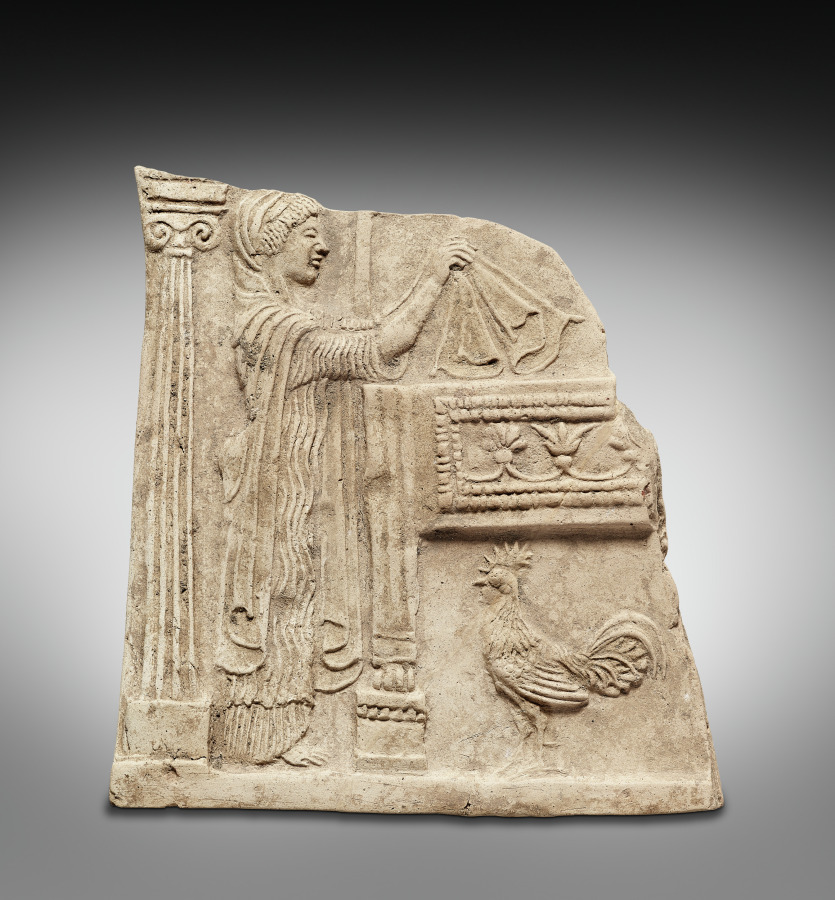
Votive Plaque (Pinax) with Persephone Making her Bridal Bed (c. 490–450 BCE) is in the Cleveland Museum of Art collection.
The work and its context
The museum's open-access catalogue describes the work:
Probably once brightly painted, this relief plaque belongs to a series of votive dedications made in Locri Epizephirii, near the “toe” of Italy, to the goddess Persephone (or Kore), daughter of Demeter. Following her abduction by Hades, god of the Underworld, Persephone regularly returned to earth, dictating the seasons and making agriculture possible. Often, as here, the plaques show domestic scenes.
Object facts
- Title: Votive Plaque (Pinax) with Persephone Making her Bridal Bed
- Date: c. 490–450 BCE
- Culture: West Greek / South Italian, Locri Epizephirii
- Type: Plaque
- Technique: Terracotta
- Dimensions: height: 17.1 cm (6 3/4 in.)
- Collection: GR - Greek
- Department: Greek and Roman Art
- Accession number: 2023.103
A detail from the museum
The rooster often appears with Persephone on such plaques, perhaps because both mark transitions.
Collection credit
Gift of Barbara S. Robinson and Family
View the collection record
See the museum's photographs and full catalogue entry. Catalogue text is reproduced from the Cleveland Museum of Art's open-access data, with HTML formatting removed. This object and its supplied image are designated CC0.
Sources
More in Lifestyle
Keep reading