Wall Hanging (msimsim) (1800s): Art, History and Details
Wall Hanging (msimsim) at the Cleveland Museum of Art: 1800s, Silk, dye. Explore the work's context, creator attribution and collection history.
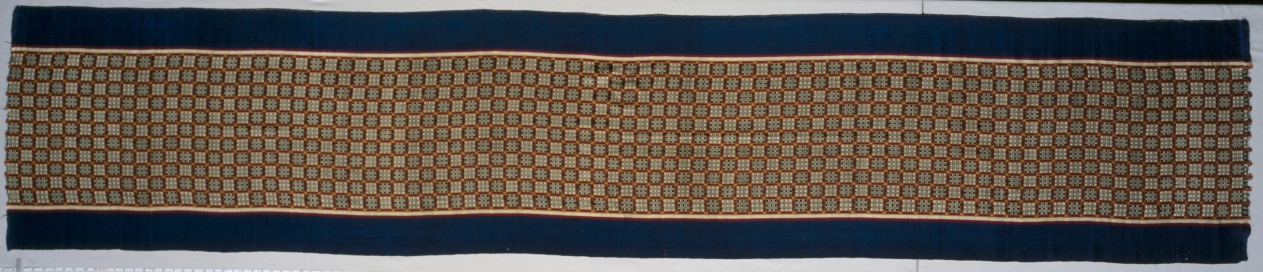
Wall Hanging (msimsim) (1800s) is in the Cleveland Museum of Art collection.
The work and its context
The museum's open-access catalogue describes the work:
Msimsim wall hangings were one of three standard marriage gifts (ṣdāq or mahr) from a groom to a bride in Tétouan, Morocco, as recorded by marriage contracts from 1794 to 1894. These gifts indicated the financial commitment of marriage: divorce occurred if they weren’t promptly received! This msimsim was made from silk harvested in Tétouan, or from raw Asian silk imported via Marseille. Its traditional design is a double-sided gridded brocade (raised woven pattern), navy on one side, crimson on the other. When this was woven, at least 25 professional silk workshops flourished in Tétouan, producing bridal gifts and other goods that outsold European imports.
Object facts
- Title: Wall Hanging (msimsim)
- Date: 1800s
- Culture: Africa, North Africa, Morocco, Tétouan, Moroccan weaver(s)
- Type: Textile
- Technique: Silk, dye
- Dimensions: Overall: 314.9 x 62.5 cm (124 x 24 5/8 in.)
- Collection: T - Islamic
- Department: Textiles
- Accession number: 2003.86
A detail from the museum
Some scholars believe these checkerboard fabrics were traded, and eventually influenced patterns in some West African strip woven textiles.
Collection credit
Gift of The Textile Art Alliance
View the collection record
See the museum's photographs and full catalogue entry. Catalogue text is reproduced from the Cleveland Museum of Art's open-access data, with HTML formatting removed. This object and its supplied image are designated CC0.
Sources
More in Lifestyle
Keep reading