Water Transport Jar (1900s): Art, History and Details
Water Transport Jar at the Cleveland Museum of Art: 1900s, Terracotta. Explore the work's context, creator attribution and collection history.
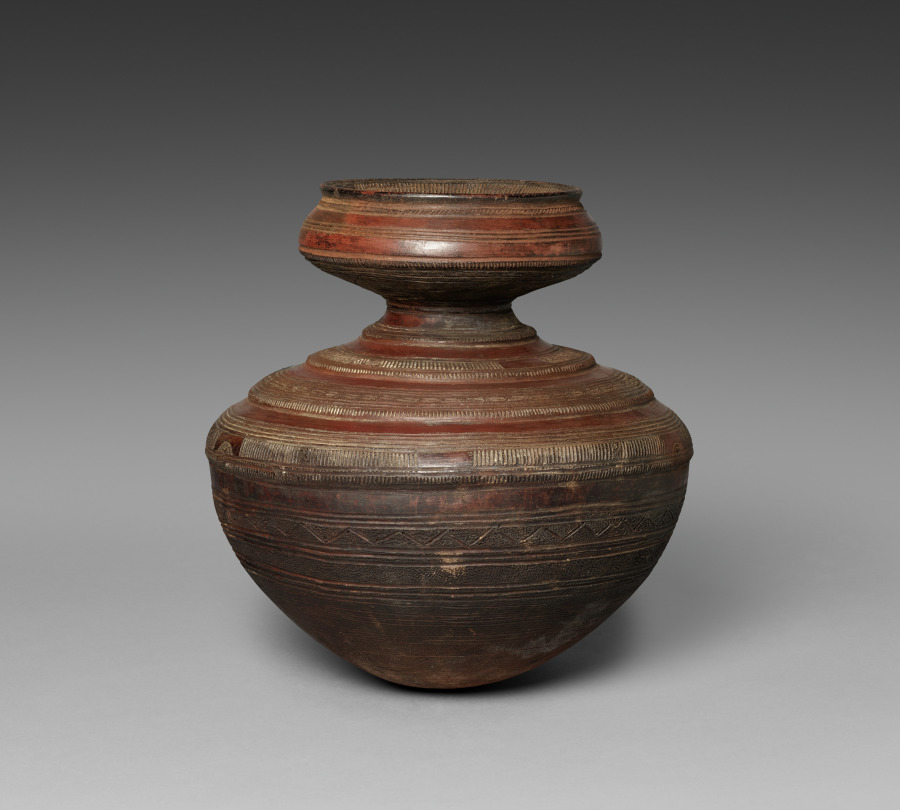
Water Transport Jar (1900s) is in the Cleveland Museum of Art collection.
The work and its context
The museum's open-access catalogue describes the work:
The Nupe, an Islamic people from northern Nigeria, embellish pottery and metalwork with intricate, nonrepresentational patterning. A female potter built this vessel by joining two bowls into a globe shape, then adding the neck. After drying, she used shells to press in designs before burnishing the exterior to a high shine. Finally, she fired the gourd-shaped vessel in a furnace. The patterns beautify and allow a firm grip when lifting the vessel. As the Gwari and Nupe people are neighbors, pottery shapes and designs often transferred between them. Look for similar zigzags and concentric lines on the nearby Gwari-inspired vessels.
Object facts
- Title: Water Transport Jar
- Date: 1900s
- Culture: Africa, West Africa, Nigeria, Nupe-style pottery, unknown female potter
- Type: Vessels
- Technique: Terracotta
- Dimensions: Diameter: 35.7 cm (14 1/16 in.); Overall: 36.9 cm (14 1/2 in.)
- Collection: African Art
- Department: African Art
- Accession number: 1995.210
A detail from the museum
The shape of this vessel probably developed from real gourds used to hold liquids.
Collection credit
John L. Severance Fund
Further reading listed by the museum
- "Permanent Collection Installations.” Cleveland Art: Cleveland Museum of Art Members Magazine 65, no. 3 (2024): 16-17.
View the collection record
See the museum's photographs and full catalogue entry. Catalogue text is reproduced from the Cleveland Museum of Art's open-access data, with HTML formatting removed. This object and its supplied image are designated CC0.
Sources
More in Lifestyle
Keep reading