Wearing Blanket with Moki (Moqui) Stripes (1865–75): Art, History and Details
Wearing Blanket with Moki (Moqui) Stripes at the Cleveland Museum of Art: 1865–75, Wool (handspun, Germantown, and bayeta): tapestry weave. Explore the work's context, creator attribution and collection history.
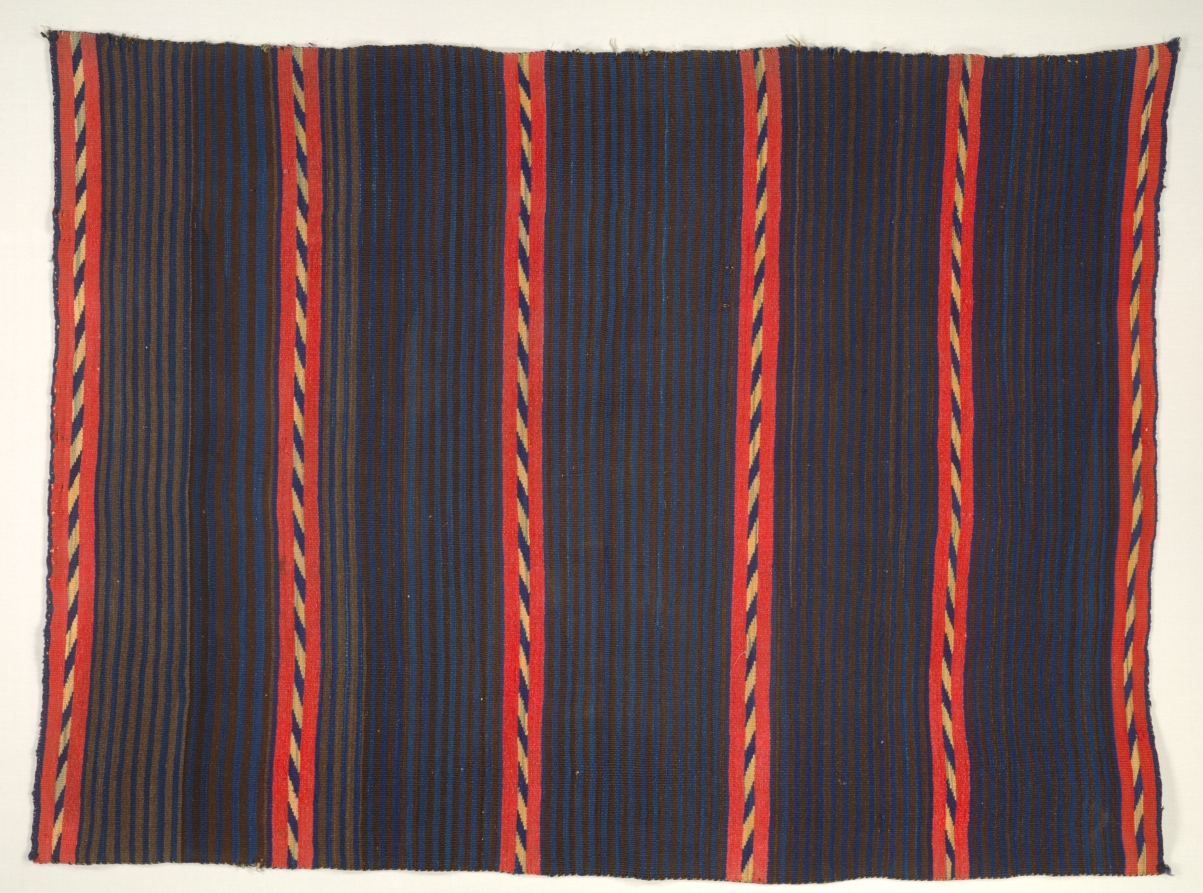
Wearing Blanket with Moki (Moqui) Stripes (1865–75) is in the Cleveland Museum of Art collection.
The work and its context
The museum's open-access catalogue describes the work:
Diné (Navajo) blankets reflect the Southwest’s cultural diversity. Both of these examples feature a striped moki pattern. The origin of moki is unclear, but it may have come from Pueblo peoples, from whom the Diné learned weaving after migrating to the Southwest from the sub-Arctic north. Or it could have come from the Spaniards, who arrived in the Southwest in 1540, not long after the Diné. Although its patterns are centuries old, these blankets were created during the late 1800s to early 1900s, when Diné weavers began to shift from making garments for Indigenous use, including trade, to creating items for outside collectors. In this market, traditional wearing-blankets, which were worn around the shoulders, became rugs sold to outsiders.
Object facts
- Title: Wearing Blanket with Moki (Moqui) Stripes
- Date: 1865–75
- Culture: America, Native North American, Southwest, (Dine) Navajo or Zuni Pueblo, female artist
- Type: Textile
- Technique: Wool (handspun, Germantown, and bayeta): tapestry weave
- Dimensions: Overall: 181 x 131.5 cm (71 1/4 x 51 3/4 in.)
- Collection: T - Native North American
- Department: Textiles
- Accession number: 1921.564
Collection credit
Gift of J. H. Wade
View the collection record
See the museum's photographs and full catalogue entry. Catalogue text is reproduced from the Cleveland Museum of Art's open-access data, with HTML formatting removed. This object and its supplied image are designated CC0.
Sources
More in Lifestyle
Keep reading