Wearing Cloth (1900–1950): Art, History and Details
Wearing Cloth at the Cleveland Museum of Art: 1900–1950, tabby weave; silk brocaded with silk and metallic threads. Explore the work's context, creator attribution and collection history.
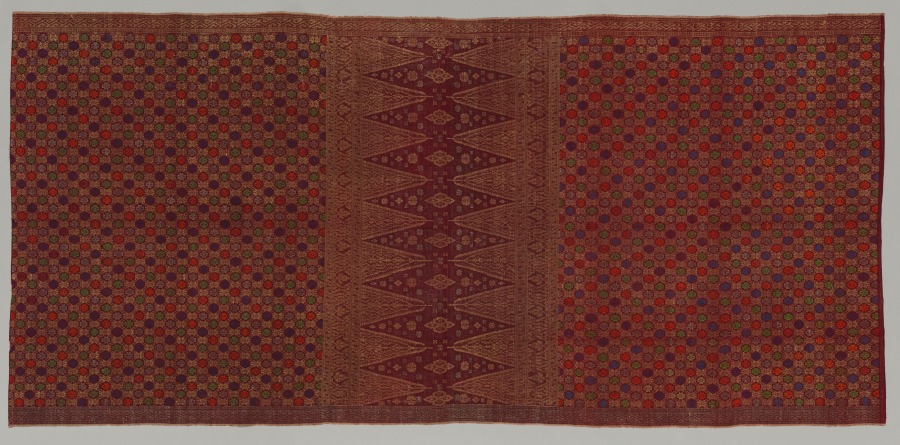
Wearing Cloth (1900–1950) is in the Cleveland Museum of Art collection.
The work and its context
The museum's open-access catalogue describes the work:
The small pattern of rosettes in the main field, the selvage borders, and the tumpal (triangle) border are characteristic of the gold, silver, and red silk cloths woven in the Palembang region. Sumptuous silks of this type were only made in the eastern coastal cities of Sumatra that maintained active trade with China and India. Not only were the silk, gold, and silver threads imported, but the elements of the design were derived from Indian patola (warp and weft ikat) silks. Traditionally, cloths like this were worn for ceremonial occasions and were also used in the exchange of gifts required on the occasion of a wedding.
Object facts
- Title: Wearing Cloth
- Date: 1900–1950
- Culture: Indonesia, Sumatra, Palembang, 1st half 20th century
- Type: Textile
- Technique: tabby weave; silk brocaded with silk and metallic threads
- Dimensions: Overall: 203.2 x 94.6 cm (80 x 37 1/4 in.)
- Collection: Textiles
- Department: Textiles
- Accession number: 1955.307
Collection credit
Gift of Mr. and Mrs. Frank E. Brown
View the collection record
See the museum's photographs and full catalogue entry. Catalogue text is reproduced from the Cleveland Museum of Art's open-access data, with HTML formatting removed. This object and its supplied image are designated CC0.
Sources
More in Lifestyle
Keep reading