Wedding Veil (1800s): Art, History and Details
Wedding Veil at the Cleveland Museum of Art: 1800s, silk, cotton, embroidery. Explore the work's context, creator attribution and collection history.
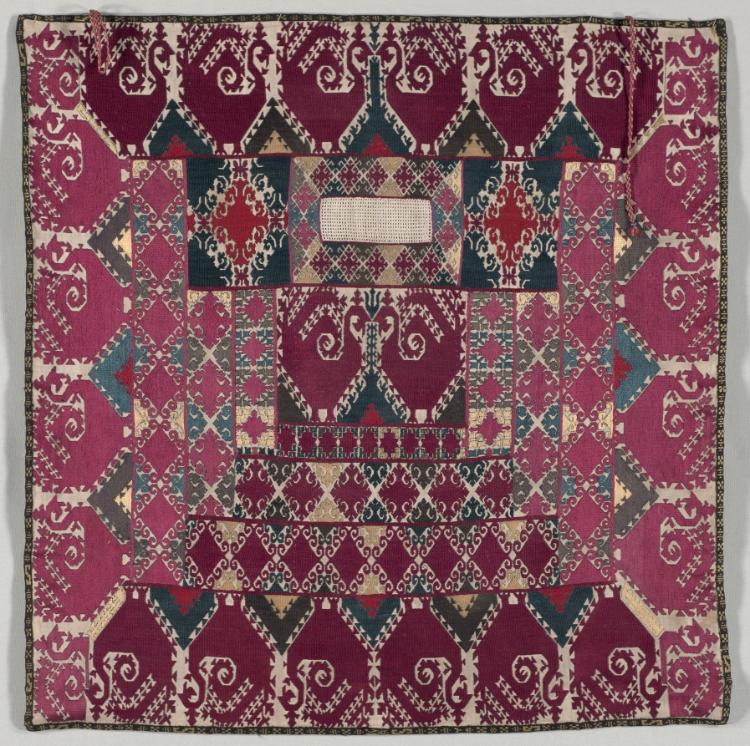
Wedding Veil (1800s) is in the Cleveland Museum of Art collection.
The work and its context
The museum's open-access catalogue describes the work:
Brides traditionally concealed their faces during their weddings and afterward as newly married women and on special occasions. This elaborate type, which includes a cotton netting rectangle that permitted vision, was only worn by Tajik Turkmen. The decoration features motifs that can be interpreted as birds or palmette leaves in a style that characterizes early Islamic art and that may have originated in Iran.
Object facts
- Title: Wedding Veil
- Date: 1800s
- Culture: Tajikistan, Tajik tribe, 19th century
- Type: Textile
- Technique: silk, cotton, embroidery
- Dimensions: Average: 76.2 x 75.6 cm (30 x 29 3/4 in.)
- Collection: T - Islamic
- Department: Textiles
- Accession number: 1916.1235
Collection credit
Gift of Mr. and Mrs. J. H. Wade
Further reading listed by the museum
- “Compass: Common Thread.” Hali, i. 228 (Summer 2026): 36-39.
View the collection record
See the museum's photographs and full catalogue entry. Catalogue text is reproduced from the Cleveland Museum of Art's open-access data, with HTML formatting removed. This object and its supplied image are designated CC0.
Sources
More in Lifestyle
Keep reading