Wine Cask with Stamped Floral Decoration (1400s): Art, History and Details
Wine Cask with Stamped Floral Decoration at the Cleveland Museum of Art: 1400s, pottery. Explore the work's context, creator attribution and collection history.
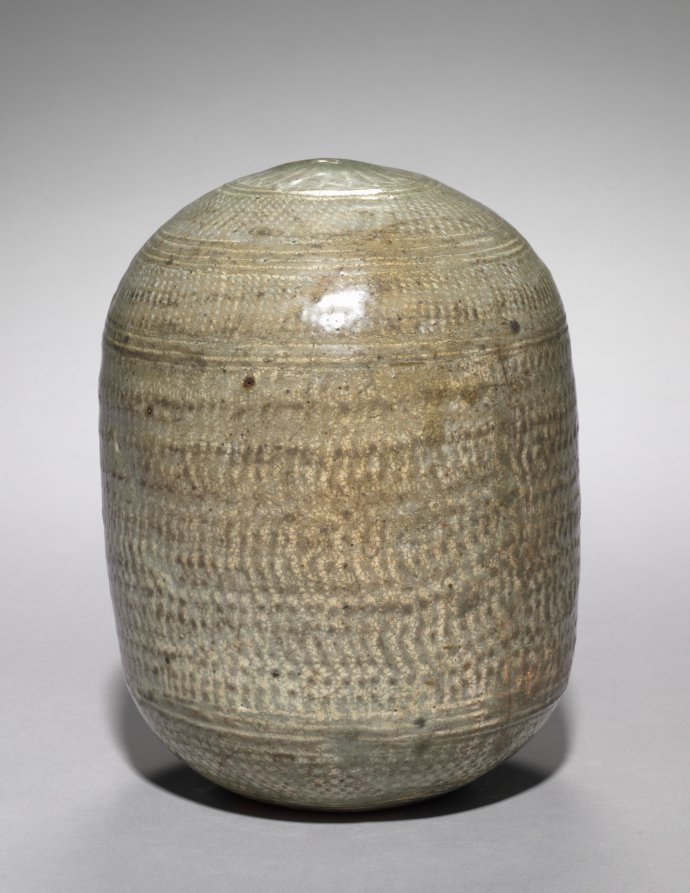
Wine Cask with Stamped Floral Decoration (1400s) is in the Cleveland Museum of Art collection.
The work and its context
The museum's open-access catalogue describes the work:
A cask-shaped vessel, such as this work, is believed to have stored different kinds of liquids, including wine, sesame oil, and even water. Having its small mouth in the middle made it useful for not only storing a beverage but also carrying it to a ritual or ceremonial site. To make this work, the artist first applied white slip, then used inlaid and stamped techniques as decorative patterns. Such repetitive and tactile expressions inspired many Korean modern and contemporary ceramic artists in response to the global trend of Abstract Expressionism.
Object facts
- Title: Wine Cask with Stamped Floral Decoration
- Date: 1400s
- Culture: Korea, Joseon dynasty (1392–1910)
- Type: Ceramic
- Technique: pottery
- Dimensions: Outer diameter: 14.9 cm (5 7/8 in.); Overall: 19.8 cm (7 13/16 in.)
- Collection: Korean Art
- Department: Korean Art
- Accession number: 1921.650
A detail from the museum
In order to transfer liquid safely without spilling, the mouth of this vessel is small and placed in the middle.
Collection credit
Gift of John L. Severance
Further reading listed by the museum
- Park, Kyung-ja and Park Hyeong-soon. “Evolution of the Buncheong Wares in the Early Joseon Period as the White Porcelain Takes over the Taxation Supply [조선 전기 공납용 백자제작에 따른 분청사기 양식변화].” Misul sahak (2010): 291–321.
- Lee, So-young, and Seung-chang Jeon. Korean Buncheong Ceramics from the Leeum Samsung Museum of Art. New York: Metropolitan Museum of Art, 2011.
- Treasures from Korea: Arts and Culture of the Joseon Dynasty, 1392-1910. Philadelphia: Philadelphia Museum of Art, 2014.
View the collection record
See the museum's photographs and full catalogue entry. Catalogue text is reproduced from the Cleveland Museum of Art's open-access data, with HTML formatting removed. This object and its supplied image are designated CC0.
Sources
More in Lifestyle
Keep reading