Wineglass and a Bowl of Fruit (1663): Art, History and Details
Wineglass and a Bowl of Fruit at the Cleveland Museum of Art: 1663, oil on canvas. Explore the work's context, creator attribution and collection history.
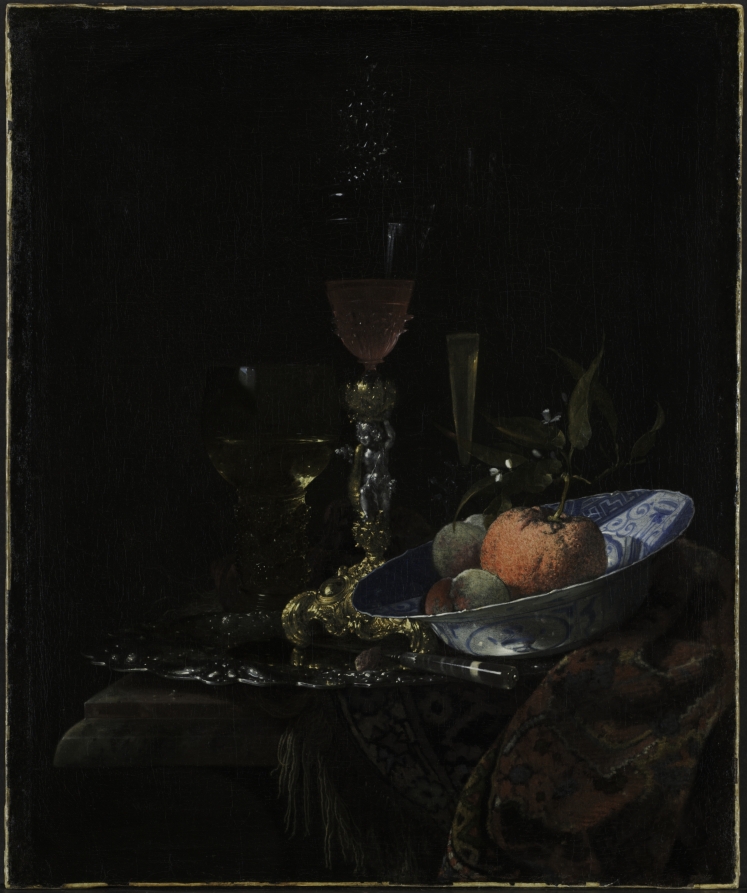
Wineglass and a Bowl of Fruit (1663) is in the Cleveland Museum of Art collection. The museum's creator attribution is Willem Kalf (Dutch, 1619–1693).
The work and its context
The museum's open-access catalogue describes the work:
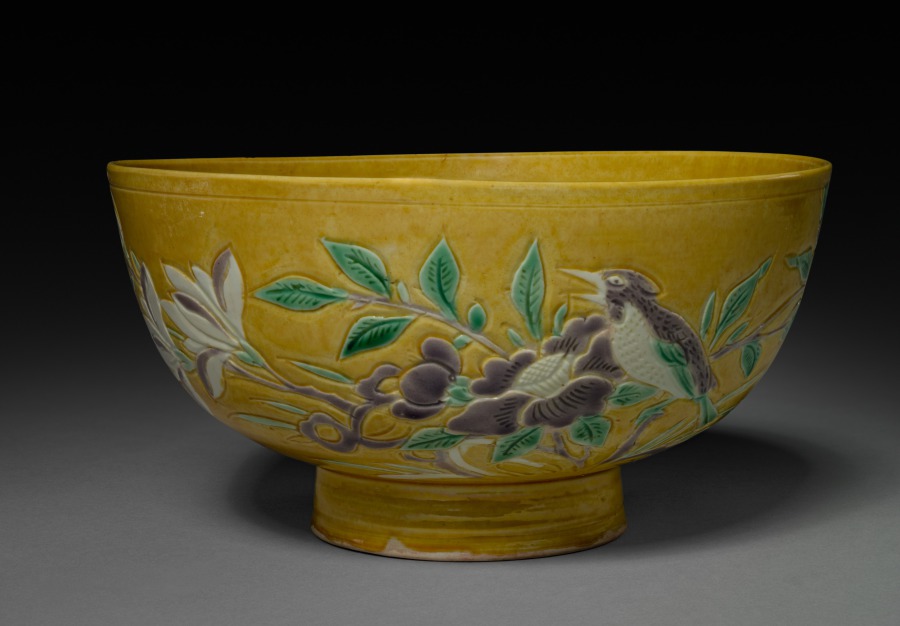
Priceless objects crowd the corner of a stone table in Kalf's composition. Pieces like the silver platter, delicate glasswares, thick rumpled carpet, and a Chinese porcelain bowl with peaches and an orange not only represented the great wealth and global reach of the Dutch trading empire, but were also a way for the artist to demonstrate his skill in recreating various surface textures. Kalf used different kinds of highlights to render reflections—quick dots, lines, and dabs of paint—creating sparkling, twinkling light effects that subtly distinguish objects from the surrounding shadows. In 1797, the German poet Johann van Goethe wrote that Kalf's paintings lead to understanding "in what sense art is superior to nature and what the spirit of man imparts to objects when it views them with creative eyes. . . . if I had to choose between the golden vessels or the picture . . . I would choose the picture."
Object facts
- Title: Wineglass and a Bowl of Fruit
- Date: 1663
- Creator attribution: Willem Kalf (Dutch, 1619–1693)
- Culture: Netherlands
- Type: Painting
- Technique: oil on canvas
- Dimensions: Framed: 81 x 70.5 x 7.5 cm (31 7/8 x 27 3/4 x 2 15/16 in.); Unframed: 60.3 x 50.2 cm (23 3/4 x 19 3/4 in.)
- Collection: P - Netherlandish-Dutch
- Department: European Painting and Sculpture
- Accession number: 1962.292
A detail from the museum
Willem Kalf was the most accomplished proponent of the pronkstilleven, a Dutch term meaning "ostentatious still life."
Collection credit
Leonard C. Hanna Jr. Fund
Further reading listed by the museum
- Segal, Sam, and William B. Jordan. A Prosperous Past: The Sumptuous Still Life in the Netherlands, 1600-1700. The Hague: SDU Publishers, 1988.
- Niels de Boer, email to Victoria Sears Goldman, Jan. 7, 2016, in CMA curatorial file.
- Willem Kalf, Index cards of work sold, A – N, Duits, Ltd. records (1920-1979), box 37, Getty Research Institute.
View the collection record
See the museum's photographs and full catalogue entry. Catalogue text is reproduced from the Cleveland Museum of Art's open-access data, with HTML formatting removed. This object and its supplied image are designated CC0.
Sources
More in Lifestyle
Keep reading