Woman Holding Plum Blossoms (mid-700s): Art, History and Details
Woman Holding Plum Blossoms at the Cleveland Museum of Art: mid-700s, earthenware covered in white slip with traces of pigment. Explore the work's context, creator attribution and collection history.
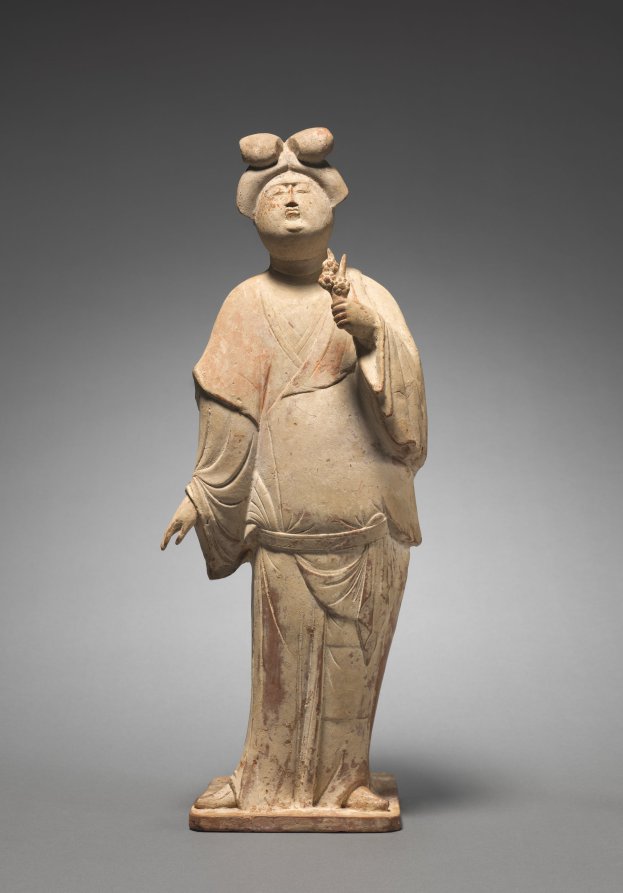
Woman Holding Plum Blossoms (mid-700s) is in the Cleveland Museum of Art collection.
The work and its context
The museum's open-access catalogue describes the work:
Tang figurines placed in the tombs give a vivid picture of everyday life. Images of elegant ladies in various hairstyles, costumes, and activities suggest the fashion of the time. This example of a plump and flamboyant lady is a common type found in mid-8th-century tombs, especially in the cosmopolitan city of Xi'an. Together with other figurines—court officials, musicians, dancers, hunters, foreign travelers, horses, camels, guardian warriors, and guardian animals—such tomb sculptures accompanied the deceased in the afterlife.
Object facts
- Title: Woman Holding Plum Blossoms
- Date: mid-700s
- Culture: North China, Tang dynasty (618-907)
- Type: Sculpture
- Technique: earthenware covered in white slip with traces of pigment
- Dimensions: Overall: 43.8 x 16.5 x 12.2 cm (17 1/4 x 6 1/2 x 4 13/16 in.)
- Collection: China - Tang Dynasty
- Department: Chinese Art
- Accession number: 1987.13
A detail from the museum
Tang aristocratic women had a high degree of freedom, especially in contrast with the Neo-Confucianism of the later Song dynasty.
Collection credit
John L. Severance Fund
Further reading listed by the museum
- Bickford, Maggie. Bones of jade, soul of ice: the flowering plum in Chinese art. New Haven, CT: Yale University Art Gallery, 1985.
- Turner, Evan H. “The Year in Review for 1987.” The Bulletin of the Cleveland Museum of Art, vol. 75, no. 2, 1988, pp. 30–71.
- "Principales Acquisitions des Musées en 1987." Gazette des Beaux Arts, Mars 1988, Vol. 111, Issue 130, pp. 1-56.
View the collection record
See the museum's photographs and full catalogue entry. Catalogue text is reproduced from the Cleveland Museum of Art's open-access data, with HTML formatting removed. This object and its supplied image are designated CC0.
Sources
More in Lifestyle
Keep reading