Worship of Dvaraka Nathji at Kankroli (c. 1880): Art, History and Details
Worship of Dvaraka Nathji at Kankroli at the Cleveland Museum of Art: c. 1880, Gum tempera and gold on paper. Explore the work's context, creator attribution and collection history.
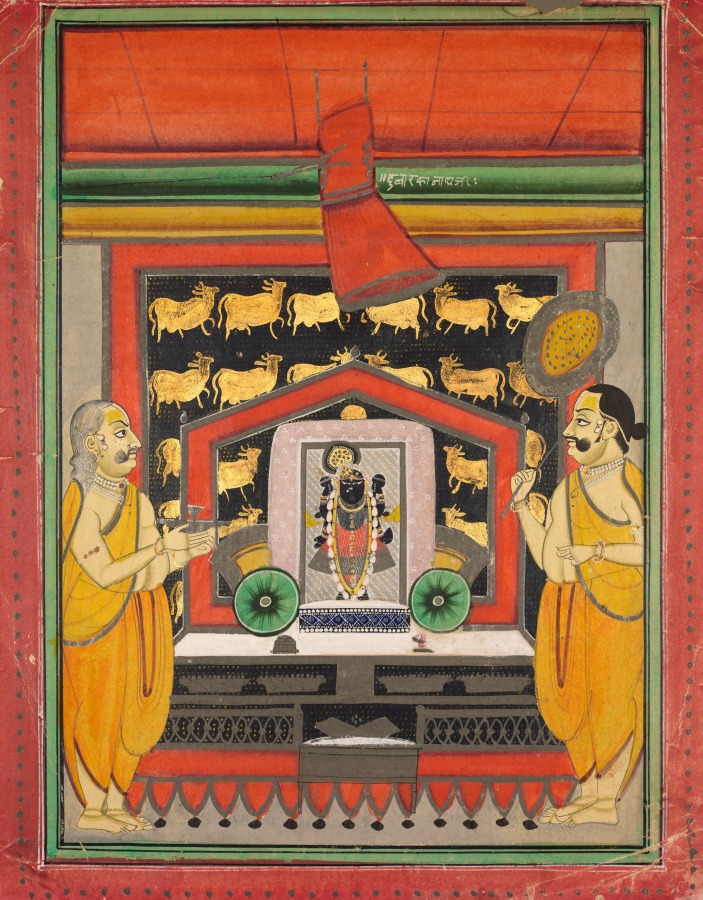
Worship of Dvaraka Nathji at Kankroli (c. 1880) is in the Cleveland Museum of Art collection.
The work and its context
The museum's open-access catalogue describes the work:
The four-armed sculpture on the altar is understood by followers of the Pushti Marg system as a living embodiment of Krishna, who generated another pair of arms when playing hide-and-seek with his favorite milkmaid, Radha. The sculpture is called Dvaraka Nathji, and his shrine is located in Kankroli, near Nathdwara in northwestern India. The golden cows adorn a textile backdrop (pichvai) behind the sculpture and reference Krishna’s youth in a cowherd village.
Object facts
- Title: Worship of Dvaraka Nathji at Kankroli
- Date: c. 1880
- Culture: Northwestern India, Rajasthan, Rajput Kingdom of Kota
- Type: Painting
- Technique: Gum tempera and gold on paper
- Dimensions: Overall: 32.8 x 25.2 cm (12 15/16 x 9 15/16 in.)
- Collection: Indian Art
- Department: Indian and Southeast Asian Art
- Accession number: 2001.161
Collection credit
Gift of William E. Ward in memory of his wife, Evelyn Svec Ward
View the collection record
See the museum's photographs and full catalogue entry. Catalogue text is reproduced from the Cleveland Museum of Art's open-access data, with HTML formatting removed. This object and its supplied image are designated CC0.
Sources
More in Lifestyle
Keep reading