Wrapper (Lamba Akotifahana) (1800s): Art, History and Details
Wrapper (Lamba Akotifahana) at the Cleveland Museum of Art: 1800s, Silk. Explore the work's context, creator attribution and collection history.
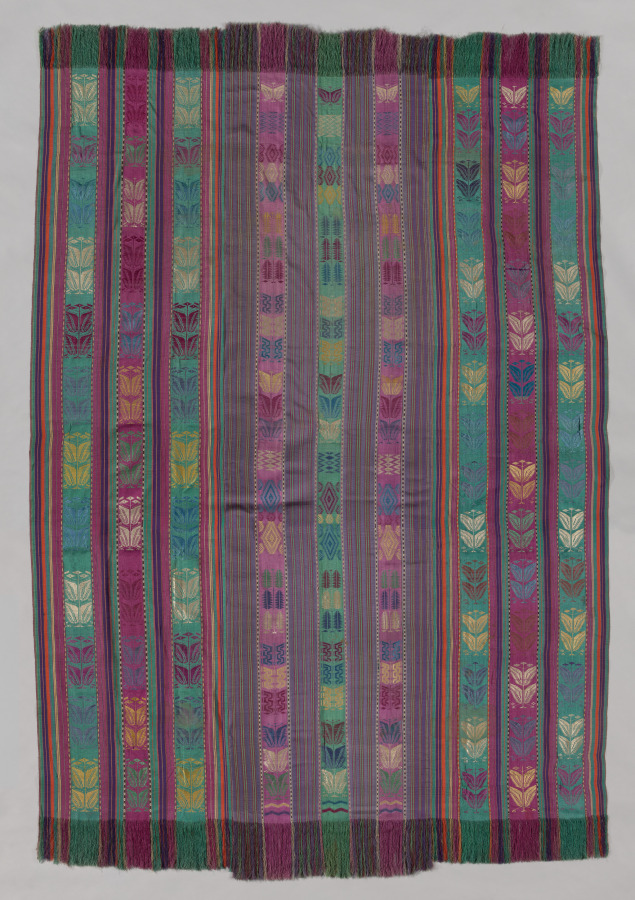
Wrapper (Lamba Akotifahana) (1800s) is in the Cleveland Museum of Art collection.
The work and its context
The museum's open-access catalogue describes the work:
A lamba is an untailored textile worn by all ages, classes, and genders across much of Madagascar. The lamba akotifahana takes its name from the weft-float motifs (akotifahana) that adorn it. Weavers added extra weft (horizontal) threads to make them. Representing the final production of lamba akotifahana during the Merina Kingdom before French colonization (1897), this example is densely covered with motifs.
Object facts
- Title: Wrapper (Lamba Akotifahana)
- Date: 1800s
- Culture: Madagascar, Merina Kingdom
- Type: Textile
- Technique: Silk
- Dimensions: Overall: 175 x 226 cm (68 7/8 x 89 in.)
- Collection: African Art
- Department: African Art
- Accession number: 2025.272
A detail from the museum
The motifs on this weaving are not symbolic; the weaver chose them for aesthetic reasons.
Collection credit
Sundry Art - African Art Fund and Textile Fund
View the collection record
See the museum's photographs and full catalogue entry. Catalogue text is reproduced from the Cleveland Museum of Art's open-access data, with HTML formatting removed. This object and its supplied image are designated CC0.
Sources
More in Lifestyle
Keep reading