Writing Box (Suzuribako) with Europeans (1800s): Art, History and Details
Writing Box (Suzuribako) with Europeans at the Cleveland Museum of Art: 1800s, lacquered wood with gold maki-e, silver inlay and red lacquer on black ground. Explore the work's context, creator attribution and collection history.
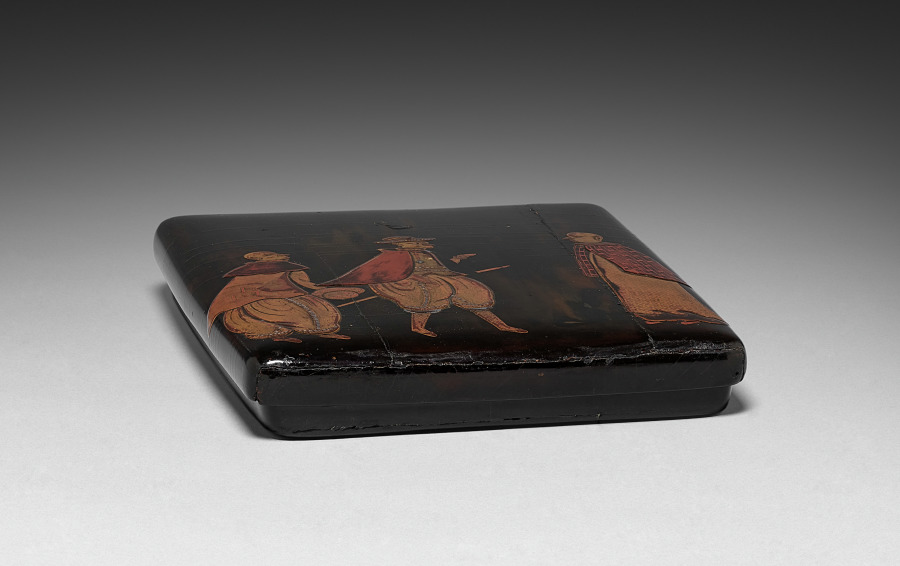
Writing Box (Suzuribako) with Europeans (1800s) is in the Cleveland Museum of Art collection.
The work and its context
The museum's open-access catalogue describes the work:
The two people on the left of this box lid's design are Portuguese traders, identifiable by their balloon-shaped pants. Facing them is a Jesuit priest in a long robe. Portuguese ships arrived in Japan in the 1540s. Imagery first made to document the appearance of the foreigners survived as decoration on later objects like this one.
Object facts
- Title: Writing Box (Suzuribako) with Europeans
- Date: 1800s
- Culture: Japan, Edo period (1615–1868)
- Type: Lacquer
- Technique: lacquered wood with gold maki-e, silver inlay and red lacquer on black ground
- Dimensions: 23 x 20.2 cm (9 1/16 x 7 15/16 in.)
- Collection: Japanese Art
- Department: Japanese Art
- Accession number: 1969.59
A detail from the museum
The Japanese term nanban 南蛮 is used to describe designs like the one on this box.
Collection credit
Andrew R. and Martha Holden Jennings Fund
View the collection record
See the museum's photographs and full catalogue entry. Catalogue text is reproduced from the Cleveland Museum of Art's open-access data, with HTML formatting removed. This object and its supplied image are designated CC0.
Sources
More in Lifestyle
Keep reading