Writing Box (Suzuribako) with Phoenix in Paulownia (tray) (c. 1573–99): Art, History and Details
Writing Box (Suzuribako) with Phoenix in Paulownia (tray) at the Cleveland Museum of Art: c. 1573–99, Lacquer on wood with sprinkled gold and silver powder (maki-e) and gold and silver foil application. Explore the work's context, creator a
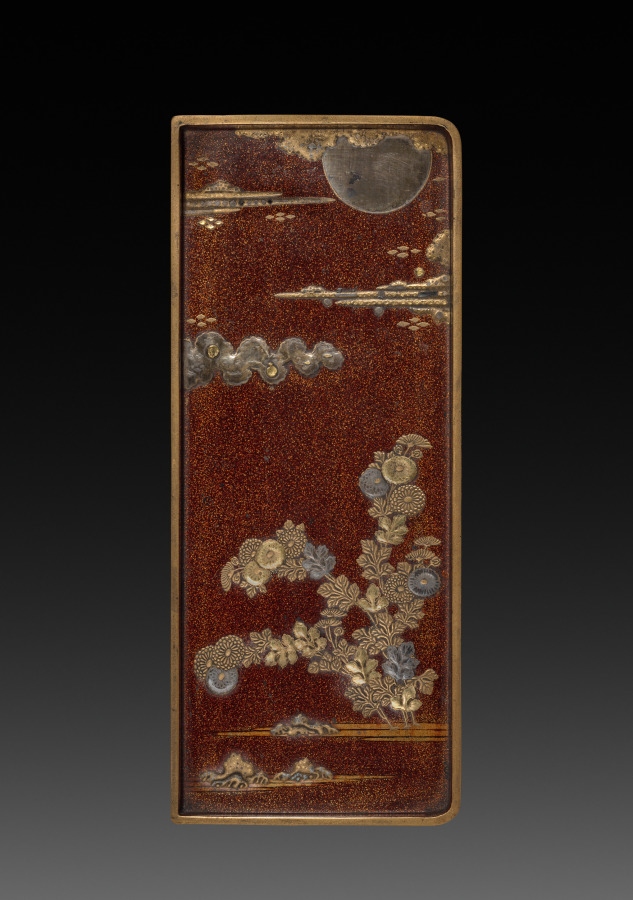
Writing Box (Suzuribako) with Phoenix in Paulownia (tray) (c. 1573–99) is in the Cleveland Museum of Art collection.
The work and its context
The museum's open-access catalogue describes the work:
The only place the mythical phoenix will perch is in the paulownia tree. Along with the dragon, the bird is a symbol of imperial power in East Asia. This box––a container for an inkstone, brushes, and ink––is both functional and lavish, its dramatic effects achieved with a pear-skin ground decoration (nashiji) and sprinkled powder decoration in high relief (takamaki-e).
Object facts
- Title: Writing Box (Suzuribako) with Phoenix in Paulownia (tray)
- Date: c. 1573–99
- Culture: Japan, Momoyama period (1573–1615)
- Type: Lacquer
- Technique: Lacquer on wood with sprinkled gold and silver powder (maki-e) and gold and silver foil application
- Dimensions: 4 x 20.5 x 23.5 cm (1 9/16 x 8 1/16 x 9 1/4 in.)
- Collection: Japanese Art
- Department: Japanese Art
- Accession number: 2016.34.d
A detail from the museum
The only place the mythical phoenix will perch is the paulownia tree.
Collection credit
Leonard C. Hanna Jr. Fund
Further reading listed by the museum
- "New in the Galleries.” Cleveland Art: Cleveland Museum of Art Members Magazine 57, no. 1 (January/February 2017): Back cover.
- Vilbar, Sinéad. “Acquisition Highlights 2016: Japanese Art.” Cleveland Art: Cleveland Museum of Art Members Magazine vol. 57, no. 2 (March/April 2017): 18–19.
View the collection record
See the museum's photographs and full catalogue entry. Catalogue text is reproduced from the Cleveland Museum of Art's open-access data, with HTML formatting removed. This object and its supplied image are designated CC0.
Sources
More in Lifestyle
Keep reading