Zaō Gongen (1100s): Art, History and Details
Zaō Gongen at the Cleveland Museum of Art: 1100s, Gilt bronze with repoussé and incised details. Explore the work's context, creator attribution and collection history.
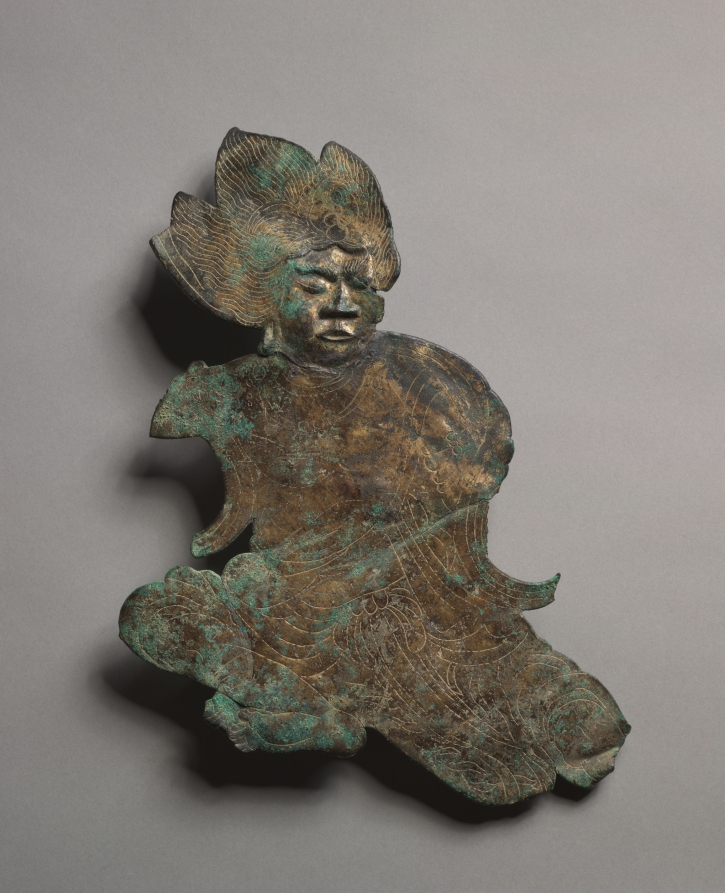
Zaō Gongen (1100s) is in the Cleveland Museum of Art collection.
The work and its context
The museum's open-access catalogue describes the work:
Zaō Gongen is the deity of Mount Kinpu, in the Yoshino Mountains south of Nara. This fragment is from a votive mirror called a kakebotoke with metal fittings at the top through which a cord could be used to hang it.
Object facts
- Title: Zaō Gongen
- Date: 1100s
- Culture: Japan, Heian period (794–1185)
- Type: Metalwork
- Technique: Gilt bronze with repoussé and incised details
- Dimensions: Overall: 25.8 x 17.8 cm (10 3/16 x 7 in.)
- Collection: Japanese Art
- Department: Japanese Art
- Accession number: 1986.47
A detail from the museum
This votive mirror would have been hung in a temple or shrine.
Collection credit
The Severance and Greta Millikin Purchase Fund
Further reading listed by the museum
- Turner, Evan H. “The Year in Review for 1986.” The Bulletin of the Cleveland Museum of Art, vol. 74, no. 2, 1987, pp. 38–79.
- “Art of Asia Acquired by North American Museums, 1987.” Archives of Asian Art, vol. 41, 1988, pp. 95–110.
- Vilbar, Sinéad, and Kevin Gray Carr. Shinto: Discovery of the Divine in Japanese Art. Cleveland, OH: Cleveland Museum of Art, 2019.
View the collection record
See the museum's photographs and full catalogue entry. Catalogue text is reproduced from the Cleveland Museum of Art's open-access data, with HTML formatting removed. This object and its supplied image are designated CC0.
Sources
More in Lifestyle
Keep reading