Buddhist Surplice (Kesa) (early 1900s): Art, History and Details
Buddhist Surplice (Kesa) at the Cleveland Museum of Art: early 1900s, silk with supplementary weft, brocaded; metal thread. Explore the work's context, creator attribution and collection history.
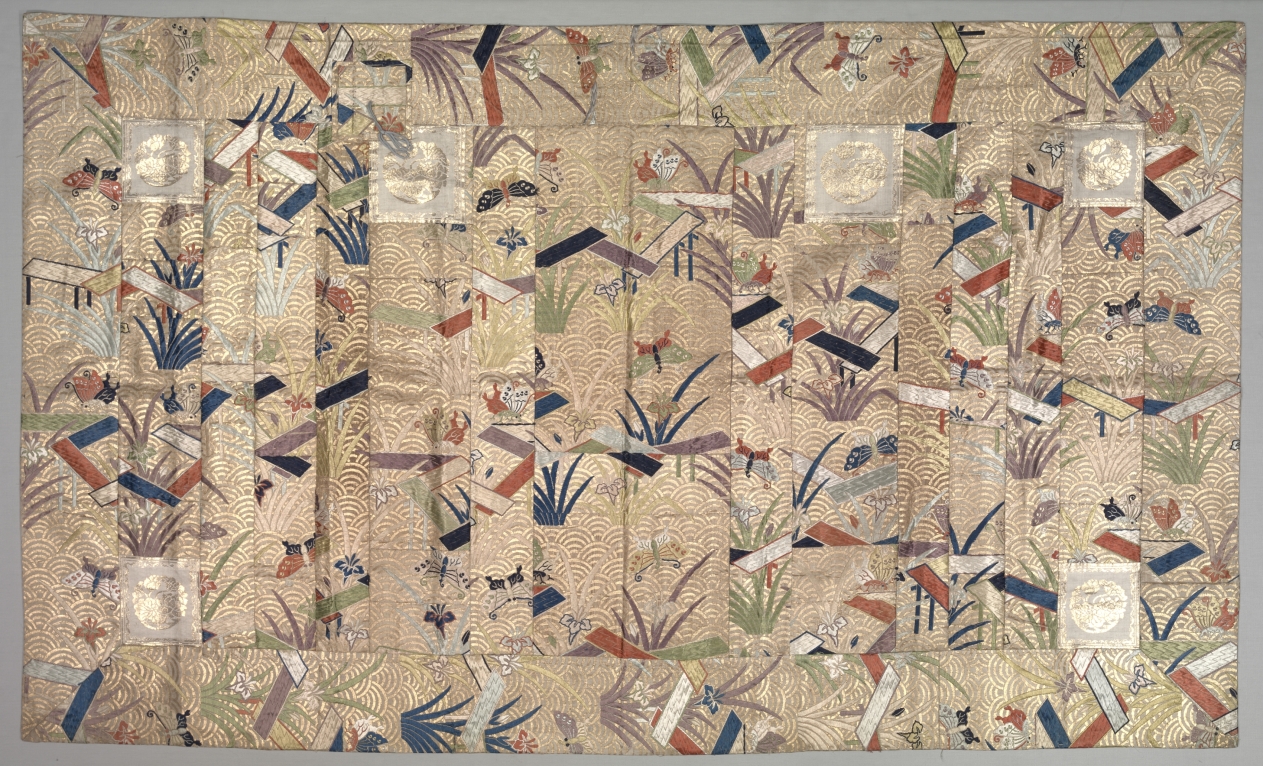
Buddhist Surplice (Kesa) (early 1900s) is in the Cleveland Museum of Art collection.
The work and its context
The museum's open-access catalogue describes the work:
The kesa is a Buddhist monk’s vestment worn folded and draped over one shoulder, and fastened over the chest. In keeping with the austere conditions of monastic life, kesa were traditionally fashioned from remainders of donated garments sewn together into a series of columns. The wider, central column symbolizes the Buddha. The squares with golden roundels in each corner represent the deities who guard the four directions, while the two at the top on either side of the central column symbolize attendant bodhisattvas, or the Nio, guardians who protect the Buddhist Law. This kesa is sewn from a textile with a butterfly and "eight bridges" (yatsuhashi) pattern.
Object facts
- Title: Buddhist Surplice (Kesa)
- Date: early 1900s
- Culture: Japan, Meiji period (1868–1912)
- Type: Garment
- Technique: silk with supplementary weft, brocaded; metal thread
- Dimensions: Average: 116.9 x 193 cm (46 x 76 in.)
- Collection: Textiles
- Department: Textiles
- Accession number: 1916.1338
Collection credit
Gift of Mr. and Mrs. J. H. Wade
View the collection record
See the museum's photographs and full catalogue entry. Catalogue text is reproduced from the Cleveland Museum of Art's open-access data, with HTML formatting removed. This object and its supplied image are designated CC0.
Sources
More in Fashion & Style
Keep reading