A scene of the life of Alexander from the Sharaf-nameh (1500s): Art, History and Details
A scene of the life of Alexander from the Sharaf-nameh at the Cleveland Museum of Art: 1500s, Opaque watercolor, ink, and gold on paper. Explore the work's context, creator attribution and collection history.
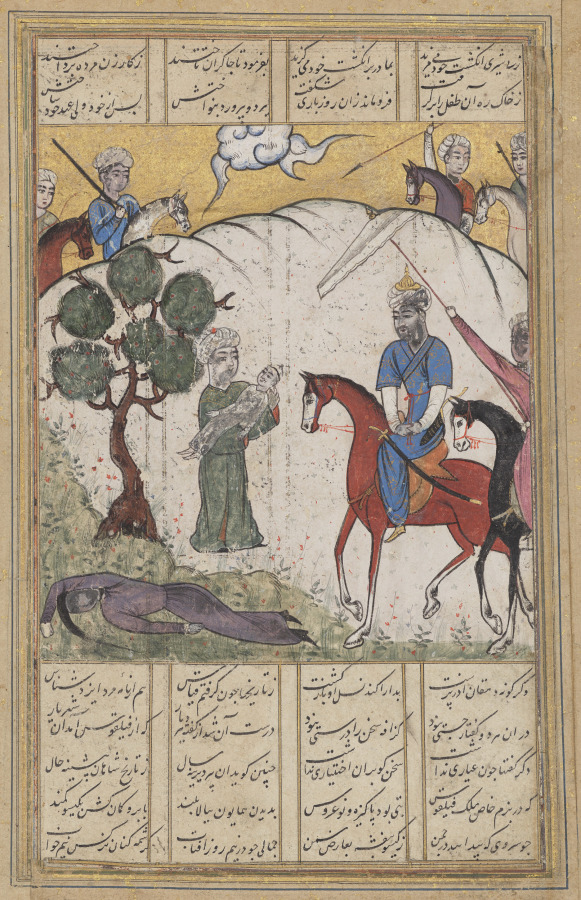
A scene of the life of Alexander from the Sharaf-nameh (1500s) is in the Cleveland Museum of Art collection.
The work and its context
The museum's open-access catalogue describes the work:
This rare scene from the life of Alexander depicts a poor and pious woman falling into a desperate situation and giving birth to a son in some desolate place. Philip, the Macedonian ruler, is on a hunt and passes the ruin. Seeing the deceased woman with a hungry baby by her side, the King orders his followers to tend to the burial of the woman and brings up the orphan making him his crown prince.
Object facts
- Title: A scene of the life of Alexander from the Sharaf-nameh
- Date: 1500s
- Culture: Iran, probably Shiraz, Safavid period (1501-1722)
- Type: Manuscript
- Technique: Opaque watercolor, ink, and gold on paper
- Collection: Islamic Art
- Department: Islamic Art
- Accession number: 2021.237
A detail from the museum
This scene is from the Sharaf-nameh, the poetical version of the life of Alexander by the 12th-century Persian poet Niẓāmī Ganjavī.
Collection credit
Gift of Lori H. Luciano in memory of her parents, Nicholas H. and Rhea A. Luciano
View the collection record
See the museum's photographs and full catalogue entry. Catalogue text is reproduced from the Cleveland Museum of Art's open-access data, with HTML formatting removed. This object and its supplied image are designated CC0.
Sources
More in Lifestyle
Keep reading