Achilles Dragging the Body of Hector (1648): Art, History and Details
Achilles Dragging the Body of Hector at the Cleveland Museum of Art: 1648, etching. Explore the work's context, creator attribution and collection history.
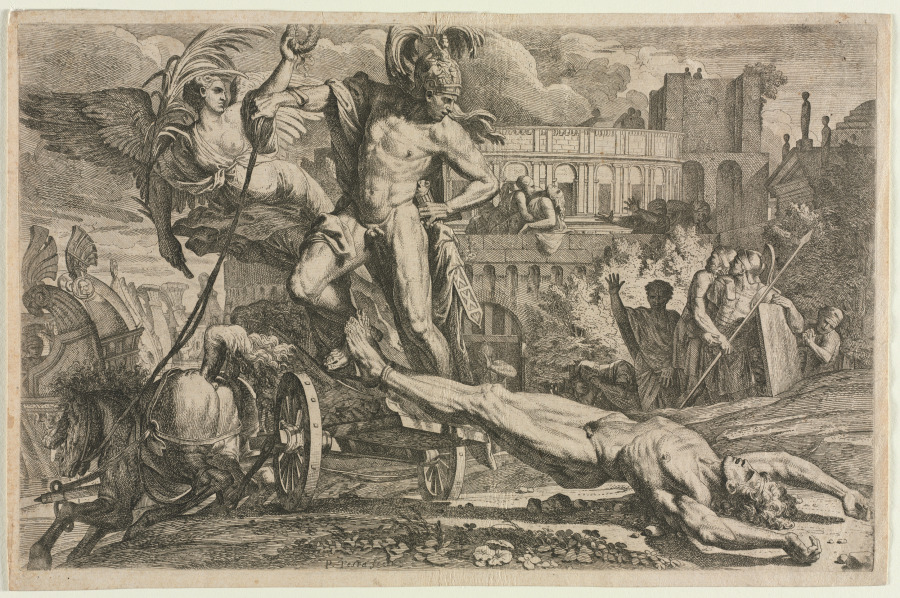
Achilles Dragging the Body of Hector (1648) is in the Cleveland Museum of Art collection. The museum's creator attribution is Pietro Testa (Italian, 1612–1650).
The work and its context
The museum's open-access catalogue describes the work:
The strong diagonals and heroic male bodies in this print relay an episode from the Trojan War in which the Greek warrior Achilles takes vengeance on the Trojan prince Hector for murdering his friend Patroclus. Here, Achilles is depicted dragging Hector’s dead body behind a chariot outside the gates of Troy. Primarily a draftsman and printmaker, Pietro Testa was known for the remarkable effects of space, texture, and light he was able to achieve by immersing the copper plate in an acid bath in several stages. This method allowed for deeper etched lines, in such areas as the dark shadows that frame the two central figures, while retaining sketchier details in the background.
Object facts
- Title: Achilles Dragging the Body of Hector
- Date: 1648
- Creator attribution: Pietro Testa (Italian, 1612–1650)
- Culture: Italy
- Type: Print
- Technique: etching
- Collection: PR - Etching
- Department: Prints
- Accession number: 1981.95
Collection credit
Gift of The Print Club of Cleveland
View the collection record
See the museum's photographs and full catalogue entry. Catalogue text is reproduced from the Cleveland Museum of Art's open-access data, with HTML formatting removed. This object and its supplied image are designated CC0.
Sources
More in Lifestyle
Keep reading