Adam and Eve (1504): Art, History and Details
Adam and Eve at the Cleveland Museum of Art: 1504, engraving. Explore the work's context, creator attribution and collection history.
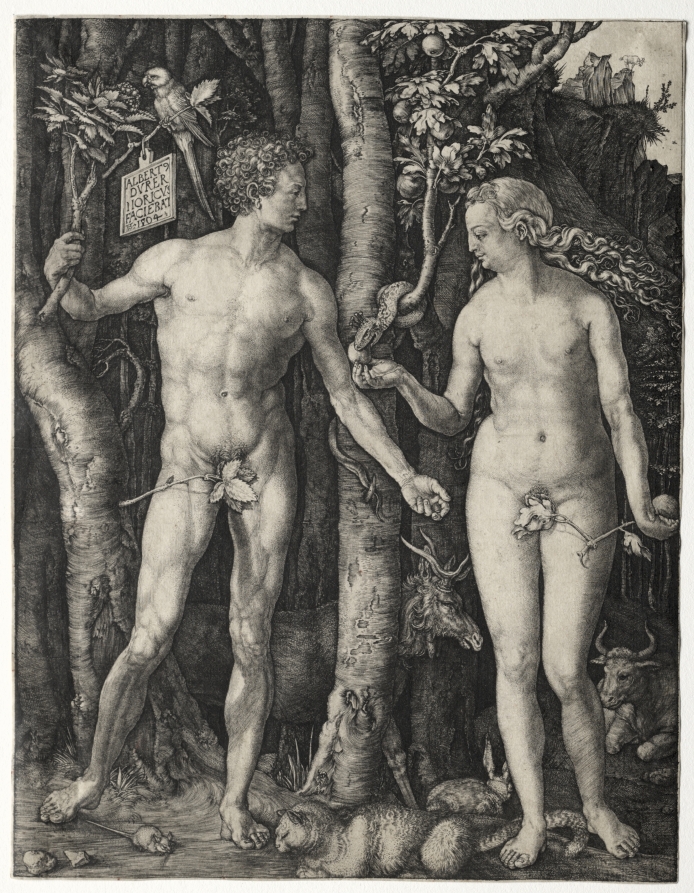
Adam and Eve (1504) is in the Cleveland Museum of Art collection. The museum's creator attribution is Albrecht Dürer (German, 1471–1528).
The work and its context
The museum's open-access catalogue describes the work:
Dürer based Adam’s pose on the Apollo Belvedere, a Roman sculpture discovered in Italy during the late 1400s. He constructed the idealized bodies of Adam and Eve using geometry and a mathematical system of proportion loosely derived from ancient models. For Dürer, who mostly depicted Christian subjects, the creation of theoretically perfect human bodies was a pathway to comprehending the divine. He thus represented Adam and Eve as he understood them in both theological and artistic terms: moments before tasting the forbidden fruit, they are still uncorrupted by sin and death, existing in a state of faultless beauty.
Object facts
- Title: Adam and Eve
- Date: 1504
- Creator attribution: Albrecht Dürer (German, 1471–1528)
- Culture: Germany, early 16th Century
- Type: Print
- Technique: engraving
- Collection: PR - Engraving
- Department: Prints
- Accession number: 1958.111
Collection credit
Bequest of Leonard C. Hanna Jr.
View the collection record
See the museum's photographs and full catalogue entry. Catalogue text is reproduced from the Cleveland Museum of Art's open-access data, with HTML formatting removed. This object and its supplied image are designated CC0.
Sources
More in Lifestyle
Keep reading