Tsuzumi Drum (1800s): Art, History and Details
Tsuzumi Drum at the Cleveland Museum of Art: 1800s, Wood with lacquer and sprinkled gold powder (maki-e), hide, iron, and cord. Explore the work's context, creator attribution and collection history.
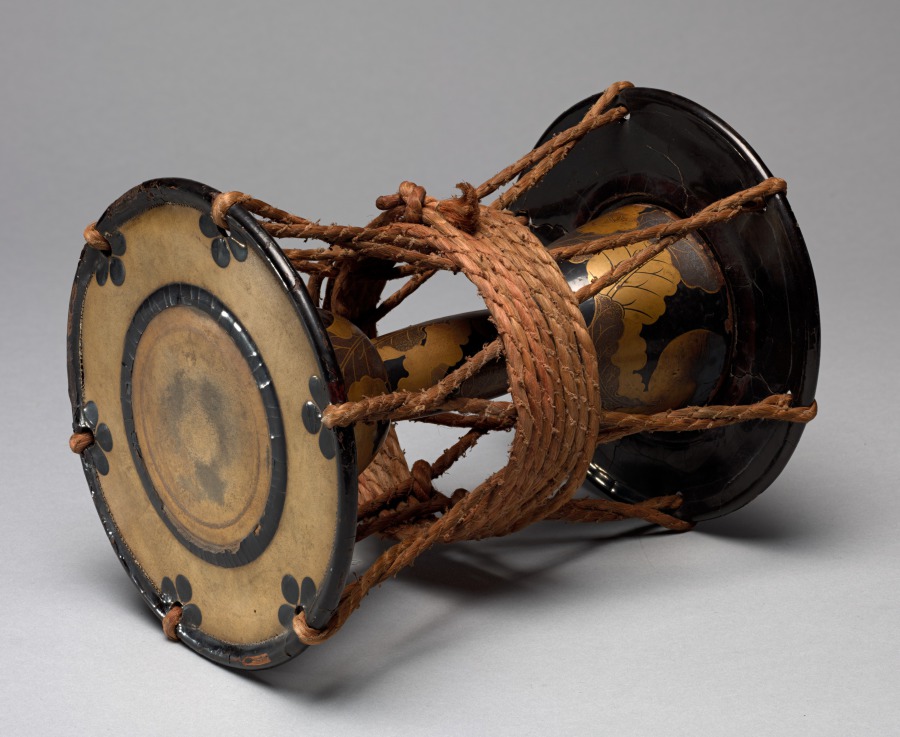
Tsuzumi Drum (1800s) is in the Cleveland Museum of Art collection.
The work and its context
The museum's open-access catalogue describes the work:
Tsuzumi hand drums were used as musical accompaniment for formal theatrical productions such as Noh, but also in traditional folk music. Small tsuzumi like this one are set against one shoulder, and held in place with one hand, while the other hand beats the heads. The sound is adjusted by regulating the humidity of the hide with one’s breath or spittle.
Object facts
- Title: Tsuzumi Drum
- Date: 1800s
- Culture: Japan, Edo period (1615–1868) to Meiji period (1868–1912)
- Type: Musical Instrument
- Technique: Wood with lacquer and sprinkled gold powder (maki-e), hide, iron, and cord
- Dimensions: Diameter: 20.4 cm (8 1/16 in.); Overall: 25.4 cm (10 in.)
- Collection: Japanese Art
- Department: Japanese Art
- Accession number: 1918.349
Collection credit
The Charles G. King Jr. collection; Gift of Ralph King in memory of Charles G. King Jr.
Further reading listed by the museum
- "Accessions." The Bulletin of the Cleveland Museum of Art 5, no. 8/9 (1918): 82-85.
- D. S. M. "Exhibition of Musical Instruments." The Bulletin of the Cleveland Museum of Art 8, no. 9 (1921): 134-43.
View the collection record
See the museum's photographs and full catalogue entry. Catalogue text is reproduced from the Cleveland Museum of Art's open-access data, with HTML formatting removed. This object and its supplied image are designated CC0.
Sources
More in Lifestyle
Keep reading