Amulet of a Crouching Bear (664–332 BCE): Art, History and Details
Amulet of a Crouching Bear at the Cleveland Museum of Art: 664–332 BCE, green porphyry. Explore the work's context, creator attribution and collection history.
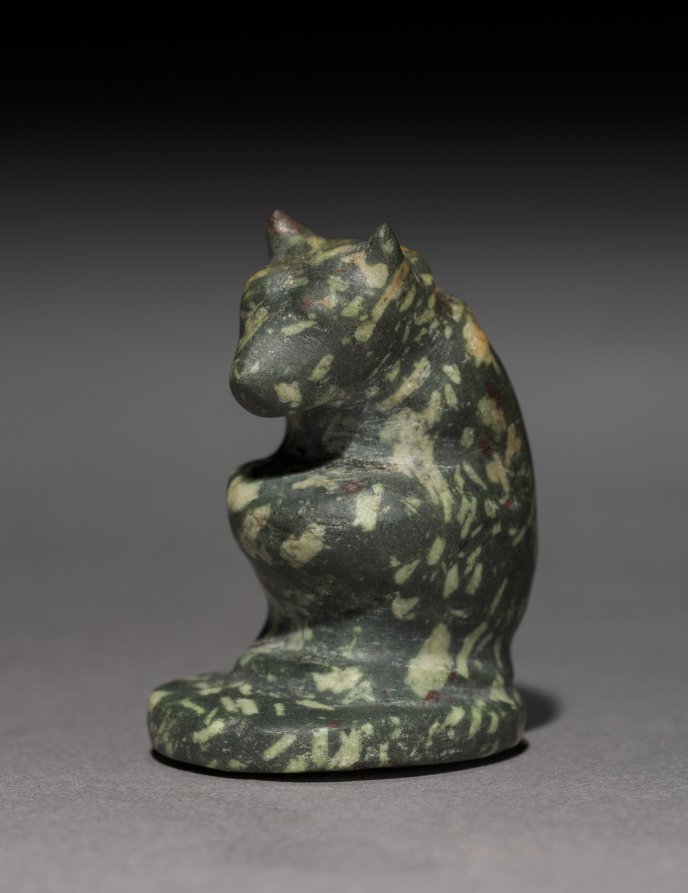
Amulet of a Crouching Bear (664–332 BCE) is in the Cleveland Museum of Art collection.
The work and its context
The museum's open-access catalogue describes the work:
For the Egyptians, the bear was an exotic species, and as early as 2400 BC it figures, though sporadically, in scenes of foreign tribute on tomb and temple walls. Representations of bears in the round are extremely rare. This bear, masterfully carved in hard greenish stone flecked with white, is a little gem. The animal rests on its haunches on a circular base, head bent forward, legs drawn up in a posture not unlike that of the classic pose for Egyptian gods. Sensitivity to such delightful details as the animal's perked-,up ears, tiny face, and wrinkled neck make this tiny giant a rare prize.
Object facts
- Title: Amulet of a Crouching Bear
- Date: 664–332 BCE
- Culture: Egypt, Late period (715–332 BCE)
- Type: Amulets
- Technique: green porphyry
- Dimensions: Overall: 3.8 cm (1 1/2 in.)
- Collection: Egypt - Late Period
- Department: Egyptian and Ancient Near Eastern Art
- Accession number: 1998.27
A detail from the museum
The bear is not native to Egypt, although until the beginning of this century it survived in Lebanon.
Collection credit
John L. Severance Fund
View the collection record
See the museum's photographs and full catalogue entry. Catalogue text is reproduced from the Cleveland Museum of Art's open-access data, with HTML formatting removed. This object and its supplied image are designated CC0.
Sources
More in Lifestyle
Keep reading
![Siana Cup (Black-Figure Kylix [Drinking Cup]): Horseman and Warriors (575–550 BCE; Cleveland 1965.78)](https://openaccess-cdn.clevelandart.org/1965.78/1965.78_web.jpg)