Antefix with Satyr Face (425–350 BCE): Art, History and Details
Antefix with Satyr Face at the Cleveland Museum of Art: 425–350 BCE, terracotta. Explore the work's context, creator attribution and collection history.
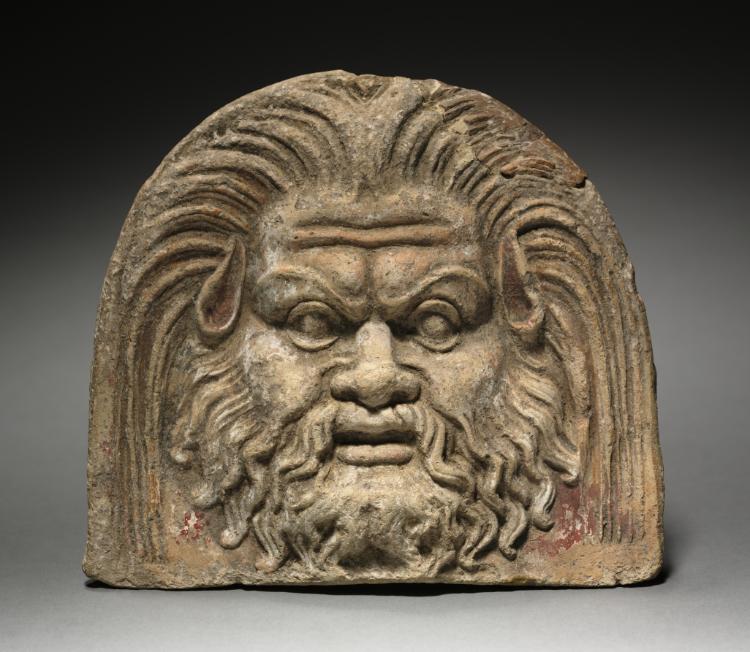
Antefix with Satyr Face (425–350 BCE) is in the Cleveland Museum of Art collection.
The work and its context
The museum's open-access catalogue describes the work:
This antefix would have been one of a series of identical tiles that decorated the edge of a roof. Ancient Greek antefixes were often stylized as mythological creatures such as gorgons or satyrs. This antefix represents the latter, showing the pointed ears and wild beard of a satyr, a nature spirit associated with ribaldry and festivals.
Object facts
- Title: Antefix with Satyr Face
- Date: 425–350 BCE
- Culture: Italy
- Type: Sculpture
- Technique: terracotta
- Dimensions: Overall: 17.1 cm (6 3/4 in.)
- Collection: GR - Greek
- Department: Greek and Roman Art
- Accession number: 1926.551
A detail from the museum
This antefix, a decorative roof tile, still retains some of its original pigment.
Collection credit
The Charles W. Harkness Endowment Fund
View the collection record
See the museum's photographs and full catalogue entry. Catalogue text is reproduced from the Cleveland Museum of Art's open-access data, with HTML formatting removed. This object and its supplied image are designated CC0.
Sources
More in Lifestyle
Keep reading