Anthropomorph (c. 1500–1000 BCE): Art, History and Details
Anthropomorph at the Cleveland Museum of Art: c. 1500–1000 BCE, copper. Explore the work's context, creator attribution and collection history.
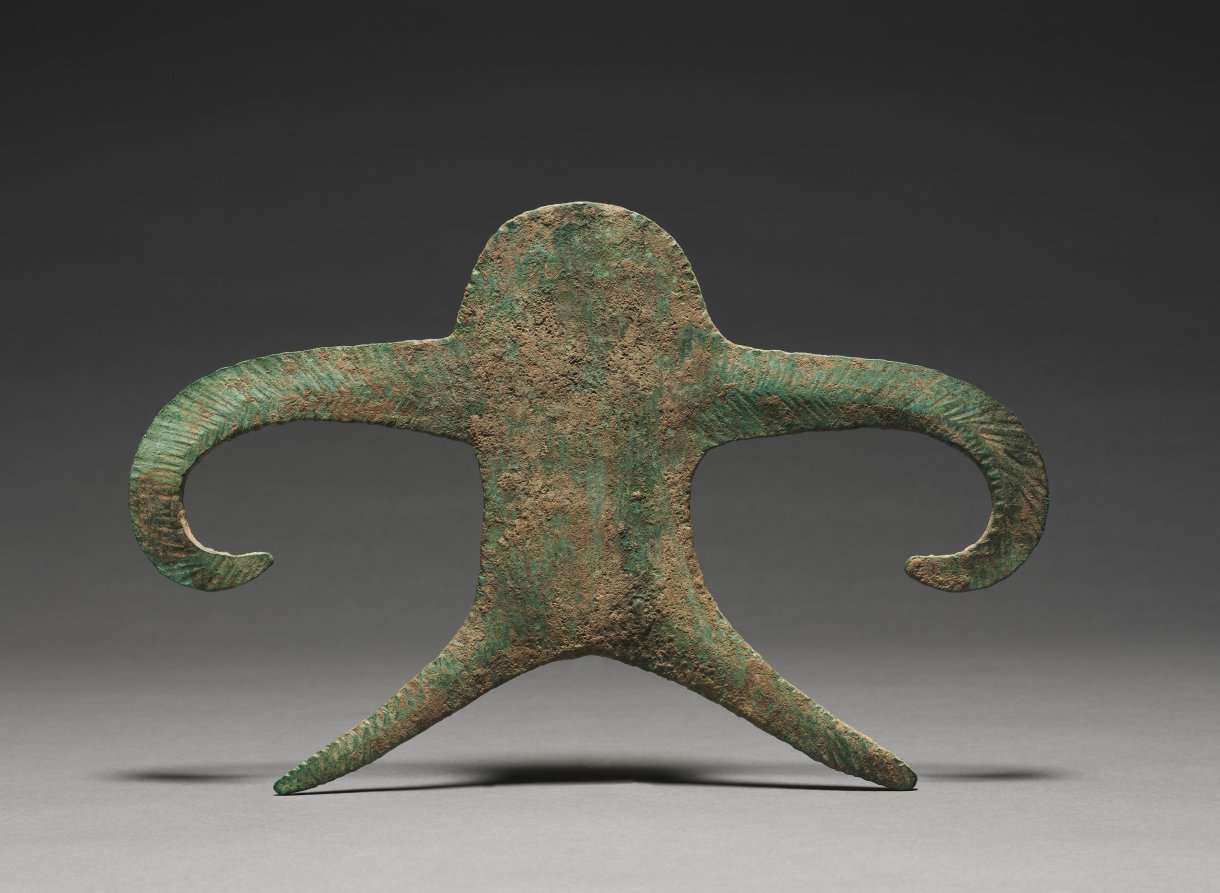
Anthropomorph (c. 1500–1000 BCE) is in the Cleveland Museum of Art collection.
The work and its context
The museum's open-access catalogue describes the work:
Among the few works of art known from the first millennium BC in India, anthropomorphs such as this fine example have an abstract formal appeal, but their meaning and function remain mysterious. They were made during the approximately 1,500-year long period of time between the protohistoric Indus Valley civilization, which flourished between about 2,800–1,800 BC, and the Maurya period (322–187 BC), when works of art must have been made in perishable materials that no longer survive.
Object facts
- Title: Anthropomorph
- Date: c. 1500–1000 BCE
- Culture: India, Bronze Age
- Type: Sculpture
- Technique: copper
- Dimensions: Overall: 23.5 x 36.5 x 0.5 cm (9 1/4 x 14 3/8 x 3/16 in.)
- Collection: Indian Art
- Department: Indian and Southeast Asian Art
- Accession number: 2004.31
A detail from the museum
Most of these mysterious objects were discovered in the plain regions of the Ganges and Yamuna Rivers of northern India.
Collection credit
Norman O. Stone and Ella A. Stone Memorial Fund
Further reading listed by the museum
- "Art of Asia Acquired by North American Museums, 2003-2004." Archives of Asian Art 56 (2006): pp. 109-32.
View the collection record
See the museum's photographs and full catalogue entry. Catalogue text is reproduced from the Cleveland Museum of Art's open-access data, with HTML formatting removed. This object and its supplied image are designated CC0.
Sources
More in Lifestyle
Keep reading