Ecce Homo (Behold the Man) (c. 1600): Art, History and Details
Ecce Homo (Behold the Man) at the Cleveland Museum of Art: c. 1600, lead. Explore the work's context, creator attribution and collection history.
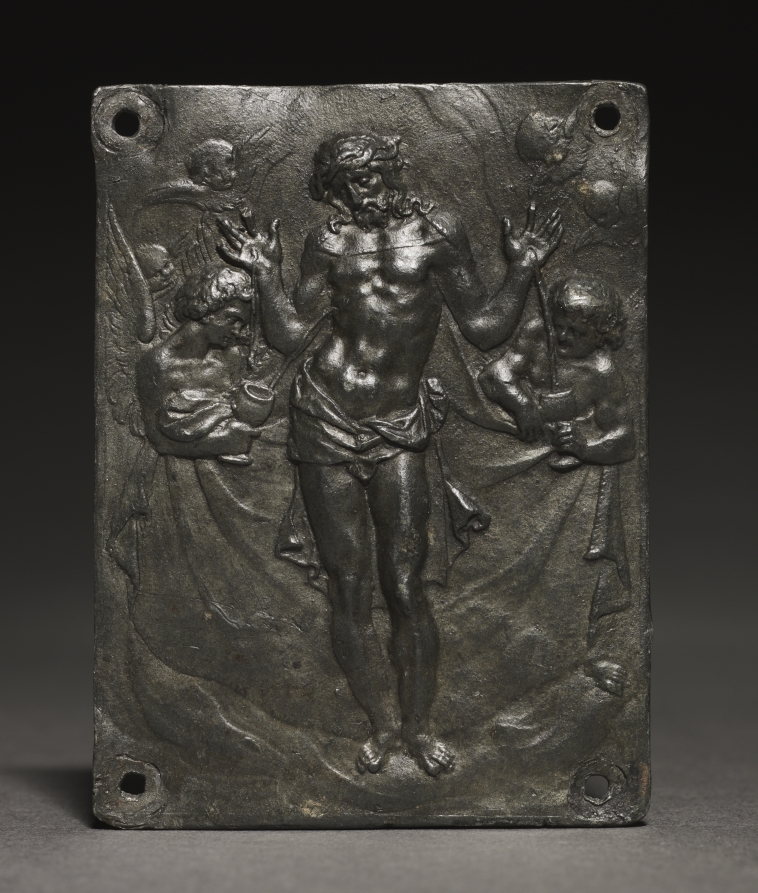
Ecce Homo (Behold the Man) (c. 1600) is in the Cleveland Museum of Art collection. The museum's creator attribution is Antonio Abondio (Italian, 1538–1591).
The work and its context
The museum's open-access catalogue describes the work:
Mass-produced plaquettes like this work offered high quality devotional images for private use. The Latin title of this work, according to the Gospel of John (19:1-5), refers to the words that were spoken by Pontius Pilate, the Roman governor of Judea, when he presented Christ, scourged and crowned with thorns, to the assembled crowds shortly before the Crucifixion. Here a full-length Christ reveals his wounds before angels who collect his blood in chalices, encouraging meditation on his suffering.
Object facts
- Title: Ecce Homo (Behold the Man)
- Date: c. 1600
- Creator attribution: Antonio Abondio (Italian, 1538–1591)
- Culture: Italy, Milan
- Type: Sculpture
- Technique: lead
- Dimensions: Overall: 8.3 x 6.4 cm (3 1/4 x 2 1/2 in.)
- Collection: Sculpture
- Department: European Painting and Sculpture
- Accession number: 1936.23
Collection credit
Gift of Mrs. George A. Martin
View the collection record
See the museum's photographs and full catalogue entry. Catalogue text is reproduced from the Cleveland Museum of Art's open-access data, with HTML formatting removed. This object and its supplied image are designated CC0.
Sources
More in Lifestyle
Keep reading