Apis Bull (400–100 BCE): Art, History and Details
Apis Bull at the Cleveland Museum of Art: 400–100 BCE, serpentinite. Explore the work's context, creator attribution and collection history.
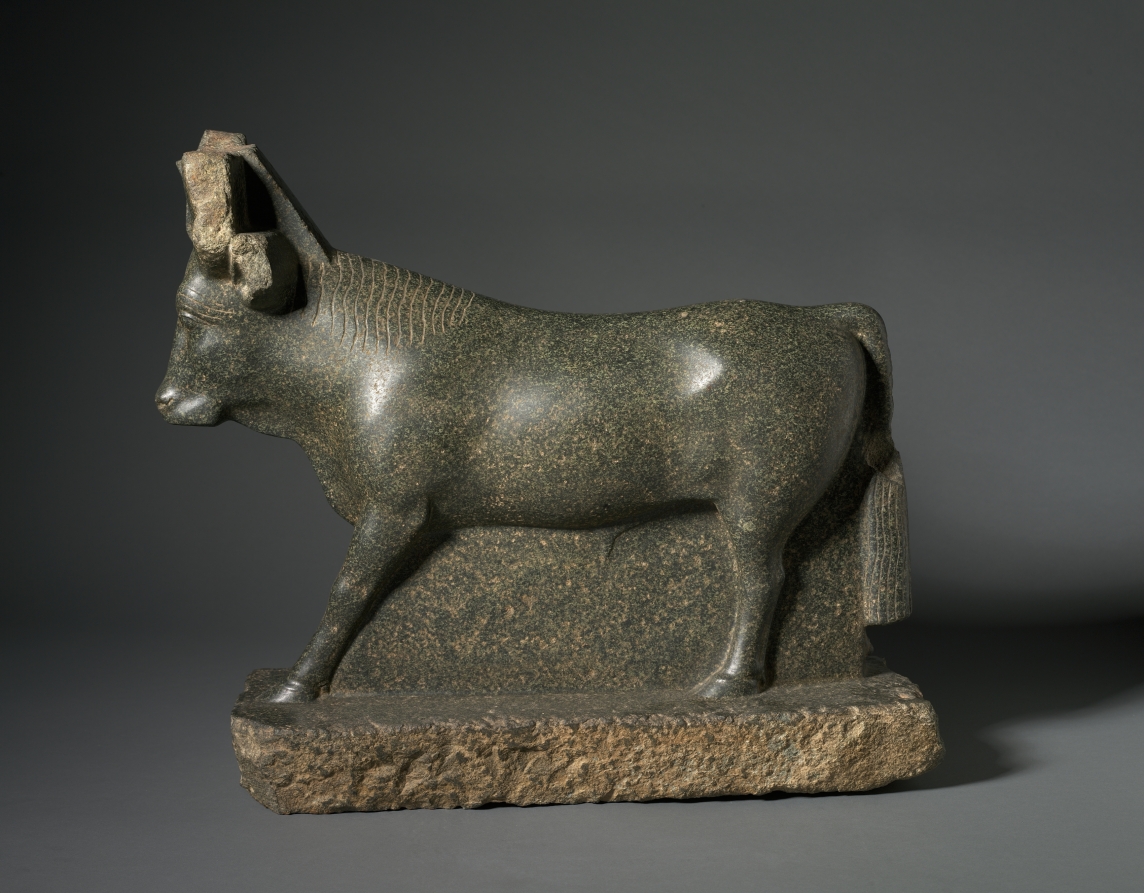
Apis Bull (400–100 BCE) is in the Cleveland Museum of Art collection.
The work and its context
The museum's open-access catalogue describes the work:
Sacred animal cults have a long history in ancient Egypt, but they became even more important in the Ptolemaic and Roman periods. Because each god could incarnate himself into any animal species, beasts of all sorts--dogs, cats, ibises, crocodiles--were protected, venerated, mummified, and collected by the thousands in specialized animal cemeteries. The sacred bull cults were different. Apis, the bull of Memphis, was a god in his own right. But he was also associated with other deities, such as Ptah, the god of Memphis, and Osiris, in the form of Osiris-Apis (or Serapis). Statues and reliefs always show him crowned with a sun disk and cobra. When an Apis bull died, he was given a burial fit for a king in an area of the Memphite cemetery known as the Serapeum.
Object facts
- Title: Apis Bull
- Date: 400–100 BCE
- Culture: Egypt, Greco-Roman period (332 BCE–395 CE), Ptolemaic dynasty (305–30 BCE)
- Type: Sculpture
- Technique: serpentinite
- Dimensions: Overall: 53 x 19 x 59 cm (20 7/8 x 7 1/2 x 23 1/4 in.)
- Collection: Egypt - Ptolemaic Dynasty
- Department: Egyptian and Ancient Near Eastern Art
- Accession number: 1969.118
A detail from the museum
A larger base, likely inscribed, may have hidden the rough, unfinished lower edges of this statue.
Collection credit
Leonard C. Hanna Jr. Fund
Further reading listed by the museum
- Lee, Sherman E. “The Year in Review for 1969.” The Bulletin of the Cleveland Museum of Art 57, no. 1 (January 1970): 2–50.
- Lanes, Jerrold ed. "Recent Accessions of American and Canadian Museums," The Art Quarterly, vol. 33, no. 4 (Winter 1970): 325.
- Cooney, John D. “A Medley of Bulls.” The Bulletin of the Cleveland Museum of Art 58, no. 1 (January 1971): 10–19.
View the collection record
See the museum's photographs and full catalogue entry. Catalogue text is reproduced from the Cleveland Museum of Art's open-access data, with HTML formatting removed. This object and its supplied image are designated CC0.
Sources
More in Lifestyle
Keep reading