Apothecary's Bottle (1670s): Art, History and Details
Apothecary's Bottle at the Cleveland Museum of Art: 1670s, porcelain with underglaze blue and overglaze color enamels (Hizen ware, Arita type). Explore the work's context, creator attribution and collection history.
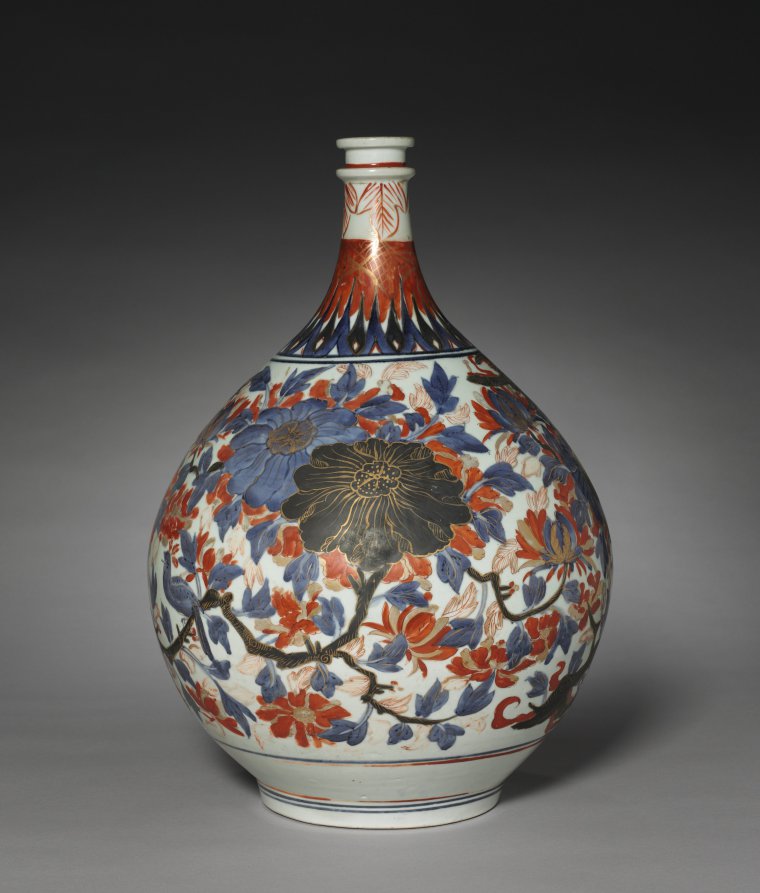
Apothecary's Bottle (1670s) is in the Cleveland Museum of Art collection.
The work and its context
The museum's open-access catalogue describes the work:
The decoration of this white porcelain bottle was achieved through a multistep process. First, some decorative elements, like the deep blue forms, were applied with glaze and then fired. Enamels were brushed on to achieve the bright colors. This bottle was probably in the collection of Johannes Camphuys (1634-1695), who was in charge of the Dutch residential island of Deshima in Nagasaki harbor.
Object facts
- Title: Apothecary's Bottle
- Date: 1670s
- Culture: Japan, Edo period (1615–1868)
- Type: Ceramic
- Technique: porcelain with underglaze blue and overglaze color enamels (Hizen ware, Arita type)
- Dimensions: Overall: 51 cm (20 1/16 in.)
- Collection: Japanese Art
- Department: Japanese Art
- Accession number: 1971.169
Collection credit
Gift of Mrs. James J. Rorimer in memory of Maurice Rohrheimer
View the collection record
See the museum's photographs and full catalogue entry. Catalogue text is reproduced from the Cleveland Museum of Art's open-access data, with HTML formatting removed. This object and its supplied image are designated CC0.
Sources
More in Lifestyle
Keep reading