Arched Fibulae (1 of 2) (725–675 BCE): Art, History and Details
Arched Fibulae (1 of 2) at the Cleveland Museum of Art: 725–675 BCE, bronze. Explore the work's context, creator attribution and collection history.
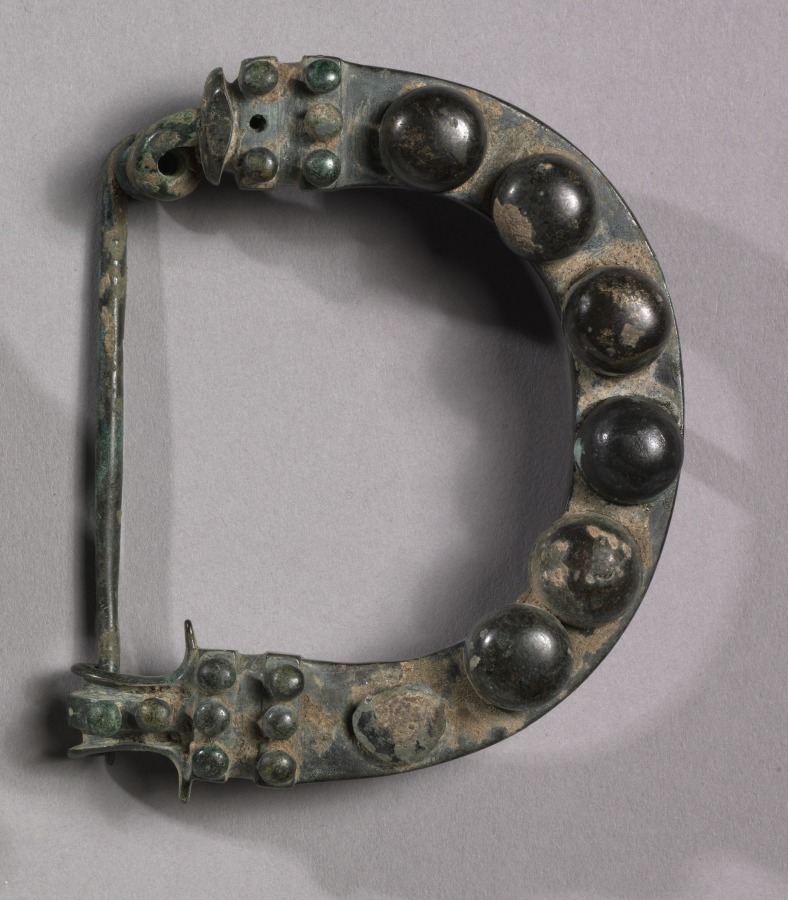
Arched Fibulae (1 of 2) (725–675 BCE) is in the Cleveland Museum of Art collection.
The work and its context
The museum's open-access catalogue describes the work:
Dated to the time of King Midas, these fibulae may have been a matched pair. The type was popular and has been found throughout Anatolia and in Greece. In the 5th century BC the Greek historian Herodotus wrote that the Phrygian king Midas reigned in the late 8th century BC, and dedicated a throne to the oracle at Delphi. This is the earliest historical reference to the Phrygians, a name given them by the ancient Greeks. The passage in Herodotus, taken together with archaeological finds in the Ionian Greek city states and on the Greek mainland, shows that Phrygians and Greeks enjoyed close relations in the late 8th to early 7th century BC.
Object facts
- Title: Arched Fibulae (1 of 2)
- Date: 725–675 BCE
- Culture: Anatolia, Phrygia
- Type: Metalwork
- Technique: bronze
- Dimensions: Overall: 6 x 7.5 cm (2 3/8 x 2 15/16 in.)
- Collection: Near Eastern Art
- Department: Egyptian and Ancient Near Eastern Art
- Accession number: 1999.87.1
Collection credit
John L. Severance Fund
View the collection record
See the museum's photographs and full catalogue entry. Catalogue text is reproduced from the Cleveland Museum of Art's open-access data, with HTML formatting removed. This object and its supplied image are designated CC0.
Sources
More in Lifestyle
Keep reading