Arched Sistrum (380–343 BCE): Art, History and Details
Arched Sistrum at the Cleveland Museum of Art: 380–343 BCE, bronze, hollow cast. Explore the work's context, creator attribution and collection history.
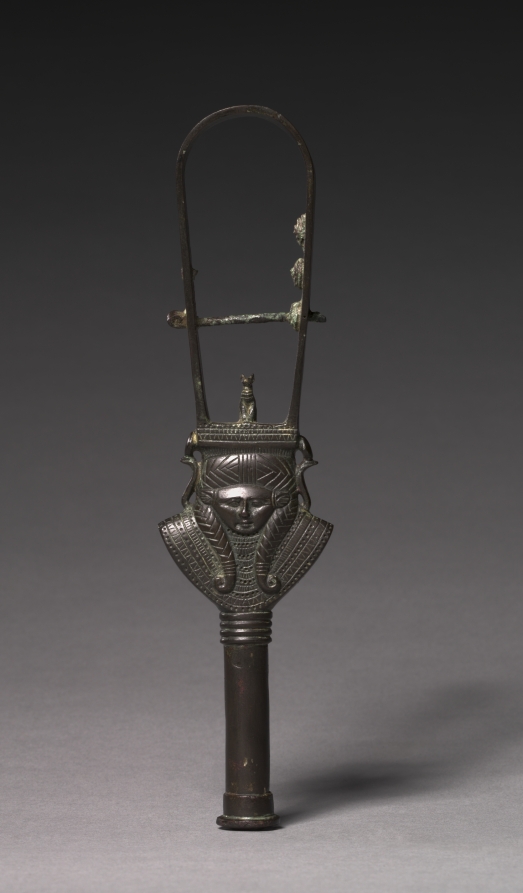
Arched Sistrum (380–343 BCE) is in the Cleveland Museum of Art collection.
The work and its context
The museum's open-access catalogue describes the work:
A sistrum is a musical rattle. Metal disks strung on wires along the arched upper end of the sistrum produced a rustling sound that was supposed to have a calming effect on the nerves of various deities, especially the goddesses Hathor and Bastet. Appropriately, this example is decorated with a Hathor head (a woman with cow’s ears) and a cat (the image of Bastet). These instruments are particularly associated with women, who played them as members of a temple choir.
Object facts
- Title: Arched Sistrum
- Date: 380–343 BCE
- Culture: Egypt, Late period (715–332 BCE), Dynasty 30
- Type: Tools and Equipment
- Technique: bronze, hollow cast
- Dimensions: Overall: 21.4 x 5.3 cm (8 7/16 x 2 1/16 in.)
- Collection: Egypt - Late Period
- Department: Egyptian and Ancient Near Eastern Art
- Accession number: 1920.1990
Collection credit
Gift of the John Huntington Art and Polytechnic Trust
Further reading listed by the museum
- University of Wisconsin--Madison. The Book and the Spade: April 13 to May 4, 1975 : the Wisconsin Center, University of Wisconsin, Madison, Wisconsin. 1975, 23.
- Berman, Lawrence M., and Kenneth J. Bohač. Catalogue of Egyptian Art: The Cleveland Museum of Art. Cleveland, OH: Cleveland Museum of Art, 1999
View the collection record
See the museum's photographs and full catalogue entry. Catalogue text is reproduced from the Cleveland Museum of Art's open-access data, with HTML formatting removed. This object and its supplied image are designated CC0.
Sources
More in Lifestyle
Keep reading