Architectural Sculpture: Face of Time (Kala-mukha) (1100s–1300s): Art, History and Details
Architectural Sculpture: Face of Time (Kala-mukha) at the Cleveland Museum of Art: 1100s–1300s, volcanic stone. Explore the work's context, creator attribution and collection history.
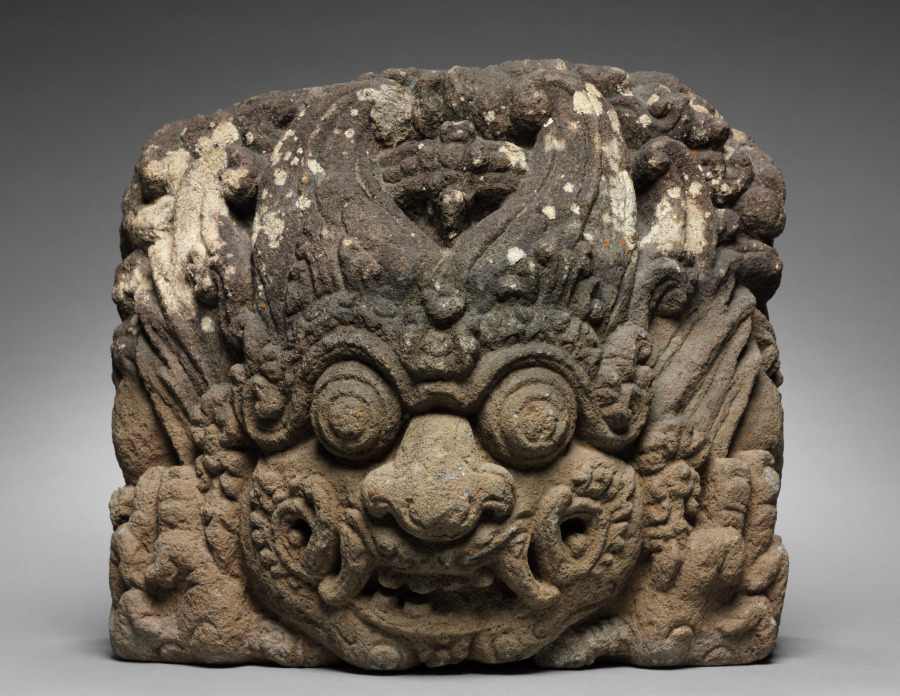
Architectural Sculpture: Face of Time (Kala-mukha) (1100s–1300s) is in the Cleveland Museum of Art collection.
The work and its context
The museum's open-access catalogue describes the work:
The bulging eyes and curved fangs of Kala emphasize the ferocity of the figure who stands for Time and Death, the devourer of all creation. Placed above the entry to an Indonesian temple, Kala serves both to protect the site and indicate a symbolic rebirth for those who pass beneath to enter the sacred space. Though related to the faces of glory on monuments in India, Kala and the volcanic stone from which it has been carved are distinctively Javanese.
Object facts
- Title: Architectural Sculpture: Face of Time (Kala-mukha)
- Date: 1100s–1300s
- Type: Sculpture
- Technique: volcanic stone
- Dimensions: Overall: 40 x 45.5 x 31 cm (15 3/4 x 17 15/16 x 12 3/16 in.)
- Collection: Javanese Art
- Department: Indian and Southeast Asian Art
- Accession number: 1975.104
A detail from the museum
The fiercest looking Kala masks are from eastern Java, made between the 10th to 15th century.
Collection credit
Norman O. Stone and Ella A. Stone Memorial Fund
Further reading listed by the museum
- Lee, Sherman E. “The Year in Review for 1975.” The Bulletin of the Cleveland Museum of Art 63, no. 2 (February 1976): 31–71.
- The Cleveland Museum of Art. Handbook of the Cleveland Museum of Art/1978. Cleveland, OH: The Cleveland Museum of Art, 1978.
View the collection record
See the museum's photographs and full catalogue entry. Catalogue text is reproduced from the Cleveland Museum of Art's open-access data, with HTML formatting removed. This object and its supplied image are designated CC0.
Sources
More in Lifestyle
Keep reading