Bacchante (1863): Art, History and Details
Bacchante at the Cleveland Museum of Art: 1863, marble. Explore the work's context, creator attribution and collection history.
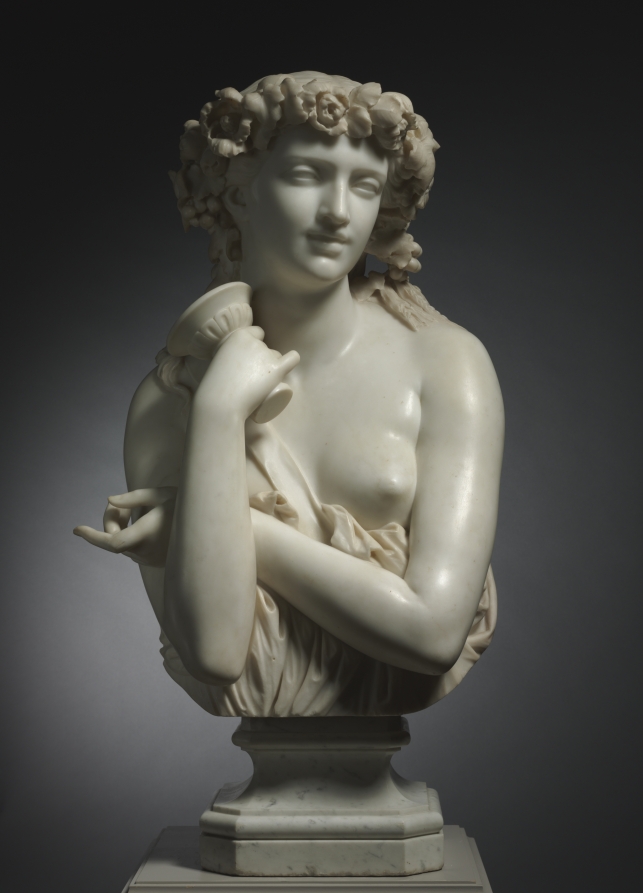
Bacchante (1863) is in the Cleveland Museum of Art collection. The museum's creator attribution is Jean-Baptiste Clésinger (French, 1814–1883).
The work and its context
The museum's open-access catalogue describes the work:
The French sculptor Auguste Clésinger spent much of his life in Rome, where this bust was created in 1863. He is particularly noted for the creation of sensual subjects in marble, such as this obviously inebriated Bacchante, a female companion of Bacchus, the Roman god of wine.
Object facts
- Title: Bacchante
- Date: 1863
- Creator attribution: Jean-Baptiste Clésinger (French, 1814–1883)
- Culture: France, 19th century
- Type: Sculpture
- Technique: marble
- Dimensions: Overall: 88 x 44.5 x 37.5 cm (34 5/8 x 17 1/2 x 14 3/4 in.)
- Collection: Mod Euro - Sculpture 1800-1960
- Department: Modern European Painting and Sculpture
- Accession number: 1979.38
Collection credit
The Thomas L. Fawick Memorial Collection
Further reading listed by the museum
- Cleveland Museum of Art, “Thomas L. Fawick Memorial Collection is on View in Year in Review Exhibition,” February 7, 1980, Cleveland Museum of Art Archives.
- Lee, Sherman E. "The Year in Review for 1979." The Bulletin of the Cleveland Museum of Art 67, no. 3 (1980): 58-99.
- Lochhead, Stuart. A Taste for the 19th Century. 2019, 38-39.
View the collection record
See the museum's photographs and full catalogue entry. Catalogue text is reproduced from the Cleveland Museum of Art's open-access data, with HTML formatting removed. This object and its supplied image are designated CC0.
Sources
More in Lifestyle
Keep reading