Baseplate for the Cleveland Apollo: Apollo Sauroktonos (Lizard-Slayer) or Apollo the Python-Slayer (c. 350–200 BCE, or possibly later): Art, History and Details
Baseplate for the Cleveland Apollo: Apollo Sauroktonos (Lizard-Slayer) or Apollo the Python-Slayer at the Cleveland Museum of Art: c. 350–200 BCE, or possibly later, bronze. Explore the work's context, creator attribution and collection his
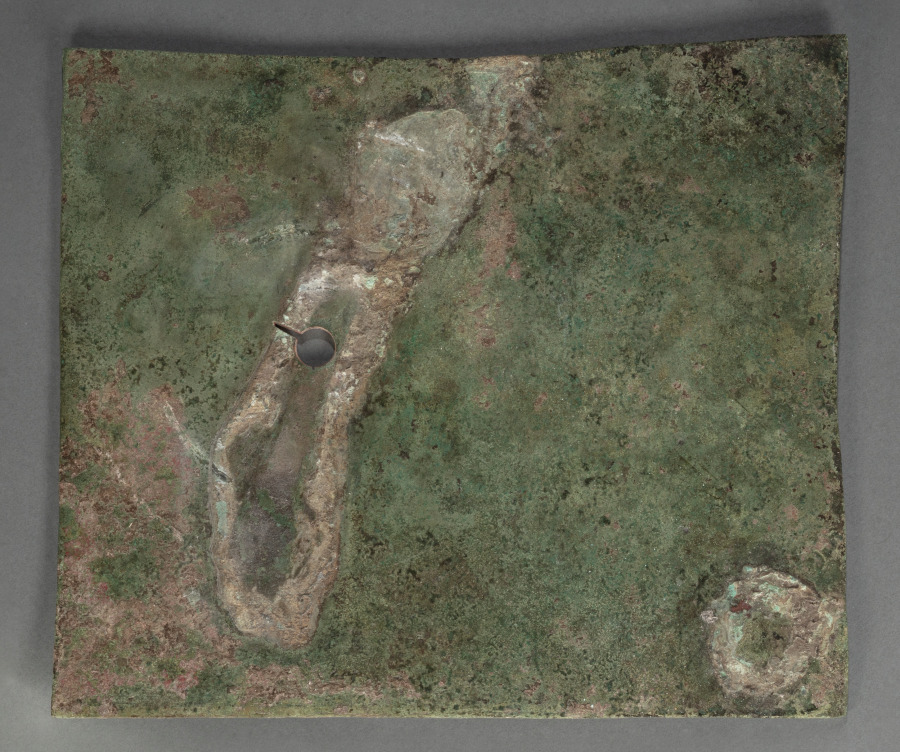
Baseplate for the Cleveland Apollo: Apollo Sauroktonos (Lizard-Slayer) or Apollo the Python-Slayer (c. 350–200 BCE, or possibly later) is in the Cleveland Museum of Art collection. The museum's creator attribution is Praxiteles (Greek, Athenian, c. 400–330 BCE); Follower.
The work and its context
The museum's open-access catalogue describes the work:
The baseplate is nearly square in shape, but two edges are noticeably concave. A modern hole facilitates mounting (with a modern rod in the right leg), and marks show the placement of both feet, once attached with lead solder. A nearly circular lead solder mark located at the front left corner likely corresponds to the placement of a small tree, now lost.
Object facts
- Title: Baseplate for the Cleveland Apollo: Apollo Sauroktonos (Lizard-Slayer) or Apollo the Python-Slayer
- Date: c. 350–200 BCE, or possibly later
- Creator attribution: Praxiteles (Greek, Athenian, c. 400–330 BCE); Follower
- Culture: Greece, Athens
- Type: Sculpture
- Technique: bronze
- Dimensions: Base: 0.5 x 45.8 x 40.3 cm (3/16 x 18 1/16 x 15 7/8 in.)
- Collection: GR - Greek
- Department: Greek and Roman Art
- Accession number: 2004.30.d
A detail from the museum
Most large-scale ancient bronze sculptures stood on bases made of stone rather than bronze.
Collection credit
Severance and Greta Millikin Purchase Fund
Further reading listed by the museum
- Cleveland Museum of Art. The CMA Companion: A Guide to the Cleveland Museum of Art. Cleveland: Cleveland Museum of Art, 2014.
- Stephen Ongpin Fine Art, and Stephen Ongpin. Renaissance to Futurism: A Selection of Italian Drawings, 1500-1920. 2015, 6.
View the collection record
See the museum's photographs and full catalogue entry. Catalogue text is reproduced from the Cleveland Museum of Art's open-access data, with HTML formatting removed. This object and its supplied image are designated CC0.
Sources
More in Lifestyle
Keep reading