Bowl (1300–1350): Art, History and Details
Bowl at the Cleveland Museum of Art: 1300–1350, fritware with underglaze-painted design. Explore the work's context, creator attribution and collection history.
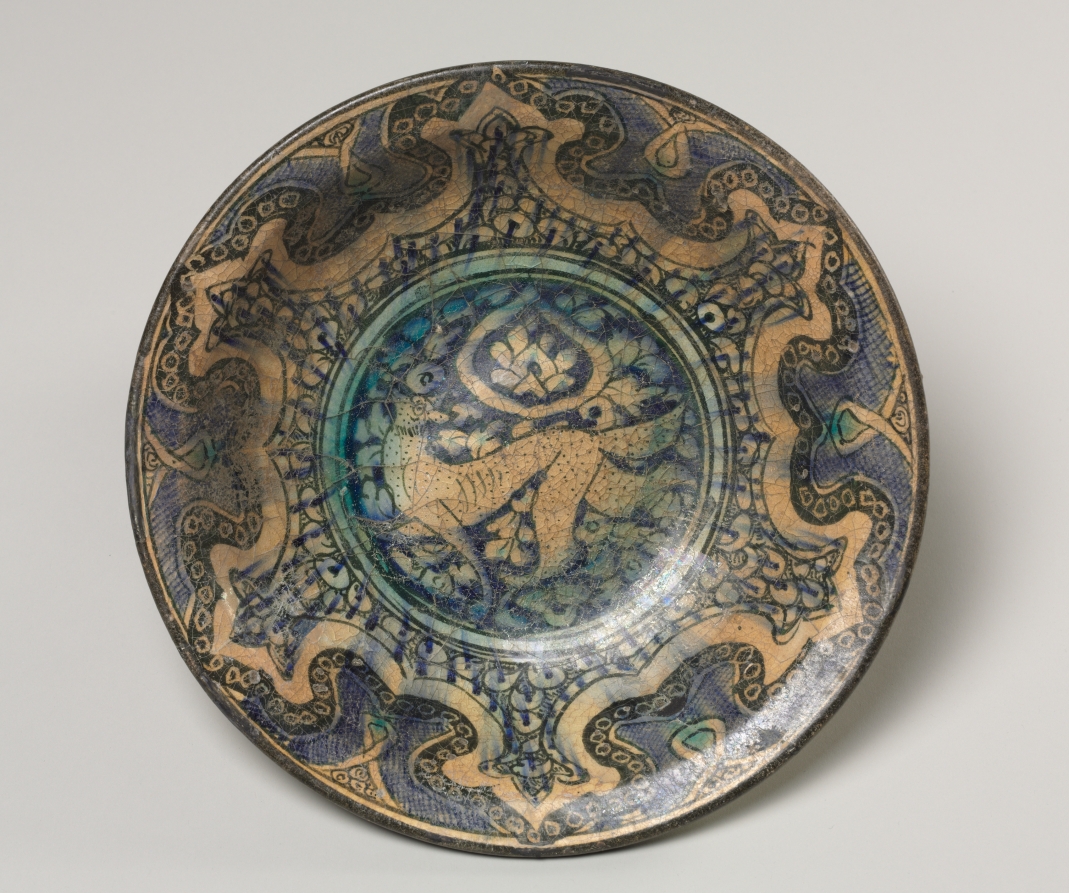
Bowl (1300–1350) is in the Cleveland Museum of Art collection.
The work and its context
The museum's open-access catalogue describes the work:
Sultanabad wares were the first new type of pottery made in Iran after the Mongol conquest. These underglaze painted wares are characterized by a somber color scheme of gray, black, and white. The name "Sultanabad" comes from the modern city near which they were first discovered. This type of pottery was widely exported, perhaps even imitated, for it has been excavated over a vast area from central Asia to Egypt.
Object facts
- Title: Bowl
- Date: 1300–1350
- Culture: Iran, probably Sultanabad
- Type: Ceramic
- Technique: fritware with underglaze-painted design
- Dimensions: Diameter: 31.5 cm (12 3/8 in.); Overall: 9 cm (3 9/16 in.)
- Collection: Islamic Art
- Department: Islamic Art
- Accession number: 1915.591
Collection credit
Gift of the John Huntington Art and Polytechnic Trust
View the collection record
See the museum's photographs and full catalogue entry. Catalogue text is reproduced from the Cleveland Museum of Art's open-access data, with HTML formatting removed. This object and its supplied image are designated CC0.
Sources
More in Lifestyle
Keep reading