Bowl (c. 100–300 CE): Art, History and Details
Bowl at the Cleveland Museum of Art: c. 100–300 CE, silver: cast and carved. Explore the work's context, creator attribution and collection history.
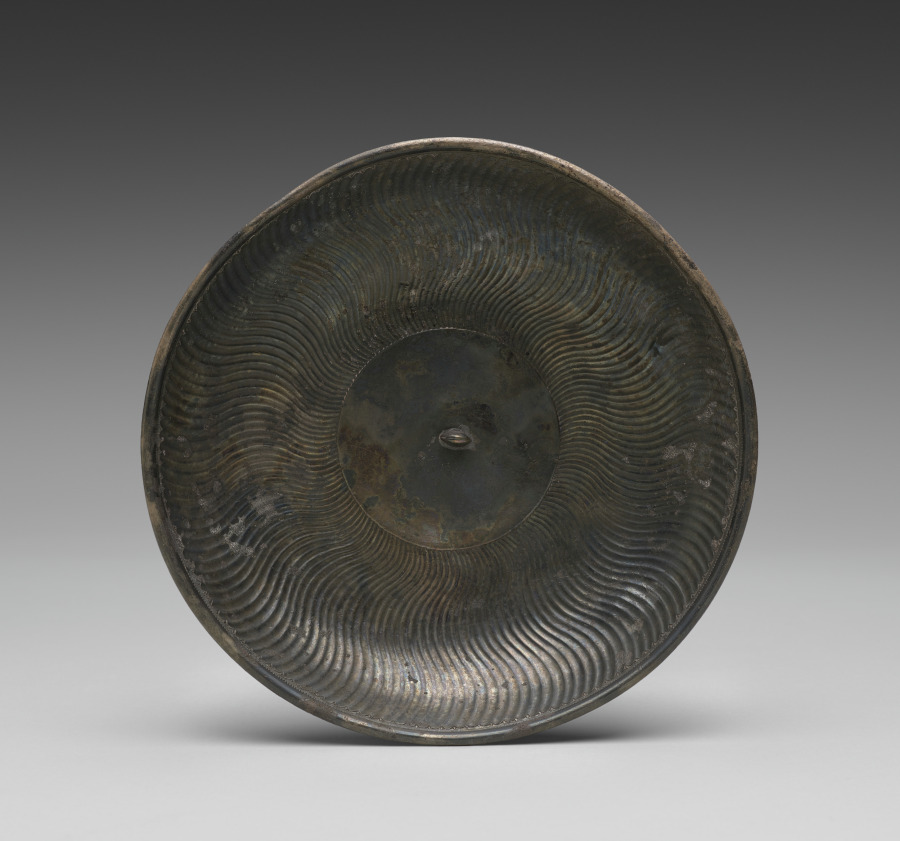
Bowl (c. 100–300 CE) is in the Cleveland Museum of Art collection.
The work and its context
The museum's open-access catalogue describes the work:
This large cast silver bowl features wavy fluting (sometimes called strigilation) across much of the interior, terminating in a sort of scalloped edge and finely beaded border beneath the rim. Within the central medallion are a miniature oblong shell-like object and the punched inscription VERISS (perhaps a name), both slightly off-center. The combination of wavy fluting, scalloped edges, and a shell-like object may allude to the sea, or to the liquid contents this bowl may once have contained.
Object facts
- Title: Bowl
- Date: c. 100–300 CE
- Culture: Roman, Imperial
- Type: Metalwork
- Technique: silver: cast and carved
- Dimensions: Diameter: 23.2 cm (9 1/8 in.)
- Collection: GR - Roman
- Department: Greek and Roman Art
- Accession number: 2023.107
A detail from the museum
This solid silver bowl weighs nearly one kilogram, more than two pounds.
Collection credit
Gift of Barbara S. Robinson and Family
Further reading listed by the museum
- Sotheby's (Firm). Antiquities and Islamic Works of Art. 1999.
View the collection record
See the museum's photographs and full catalogue entry. Catalogue text is reproduced from the Cleveland Museum of Art's open-access data, with HTML formatting removed. This object and its supplied image are designated CC0.
Sources
More in Lifestyle
Keep reading